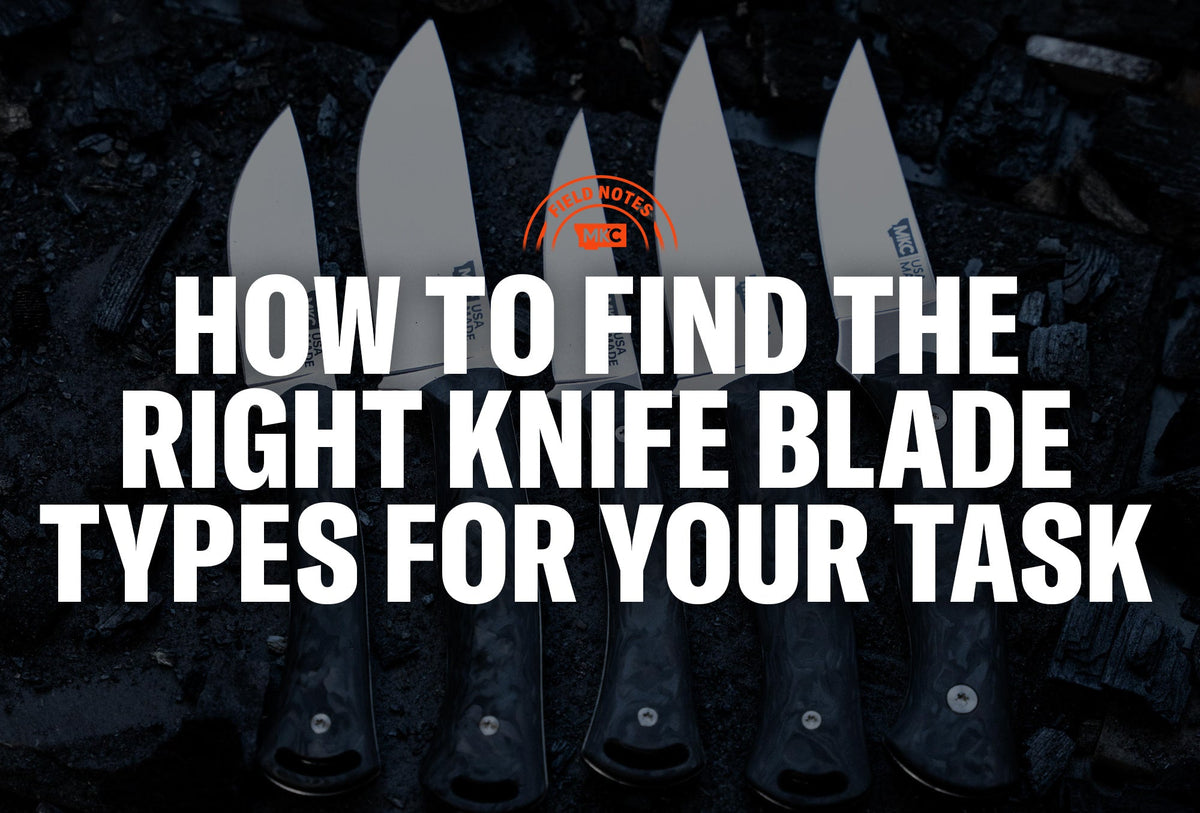

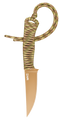
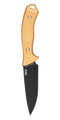
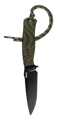
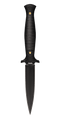



Every knife exists to complete a task. The type of knife you use determines how well you cut, how safely you work, and how much you enjoy the process, whether you’re breaking down an elk roast, field dressing a whitetail, or opening a package on your front porch.
Most knives fall into one of three categories:
- Kitchen knives handle food prep, from chopping vegetables to filleting fish.
- Outdoor and hunting knives handle field work, from skinning game to splitting kindling.
- Everyday-carry (EDC) knives handle the small, unpredictable tasks that come up between the kitchen and the field.
Types of Knives at a Glance
|
Knife Type |
Primary Use |
Typical Blade Shape |
Category |
|
Chopping, slicing, dicing, mincing |
Curved belly, 6–10 in. |
Kitchen |
|
|
Peeling, deveining, detail work |
Short, straight, 3–4 in. |
Kitchen |
|
|
Medium tasks: sandwiches, citrus, trimming |
Narrow, 4–7 in. |
Kitchen |
|
|
Serrated/Bread knife |
Crusty bread, tomatoes, delicate surfaces |
Scalloped edge, 8–10 in. |
Kitchen |
|
Separating meat from bone, silver skin |
Narrow, slightly curved, 5–7 in. |
Kitchen |
|
|
Removing fish flesh from bones |
Thin, flexible, 6–9 in. |
Kitchen |
|
|
Slicing roasts, turkey, brisket |
Long, thin, 8–12 in. |
Kitchen |
|
|
Splitting poultry, cracking bones |
Wide, heavy, rectangular |
Kitchen |
|
|
Slicing, dicing, mincing (Japanese style) |
Flat profile, 5–7 in. |
Kitchen |
|
|
Nakiri |
Vegetable prep, straight-down cuts |
Rectangular, flat edge |
Kitchen |
|
Field dressing, skinning, general camp tasks |
Drop point, 3–5 in. |
Outdoor |
|
|
Hide removal with minimal meat waste |
Wide belly, swept blade |
Outdoor |
|
|
Batoning, carving, shelter building |
Flat grind, full tang, 4–6 in. |
Outdoor |
|
|
Daily utility, opening packages, cutting cord |
Drop point or clip point, 2.5–3.5 in. |
EDC |
|
|
Heavier daily tasks where a folder falls short |
Drop point, 3–4 in. |
EDC |
Types of Kitchen Knives
A well-chosen set of kitchen knives turns meal prep from a chore into a craft. Different types of kitchen knives exist because a single blade can’t do every job.
Below are eight types of kitchen knives that cover virtually every task on the cutting board.
Chef’s Knife
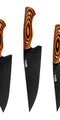
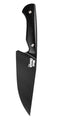
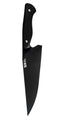
The chef’s knife is the foundation of any kitchen. Its curved blade (typically 8 inches for home cooks) handles chopping, slicing, dicing, and mincing with a rocking motion that makes prep quick. Our Bighorn Chef Knife features a 7 3/4-inch MagnaCut blade with a PVD finish and weighs 8.33 ounces, making it hefty enough to power through bone-in cuts but still nimble enough to chop herbs and garlic.
Paring Knife
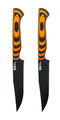
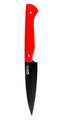
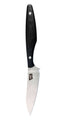
When tasks get small and detailed, a paring knife takes over. The short blade (3–4 inches) gives you fingertip control for hulling strawberries, deveining shrimp, removing potato eyes, and peeling fruit. Our Cutbank Paring Knife brings MagnaCut steel to this category, with a 4 1/8-inch blade and a weight of just 2.57 ounces.
Utility/Petty Knife
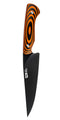
The utility knife (called a petty knife in Japanese kitchens) fills the gap between a chef’s knife and a paring knife. A 4–7 inch blade works best for slicing sandwiches, cutting citrus, and trimming vegetables. The Little Bighorn Petty is our take on this category, with all the versatility of a chef’s knife but with tighter control and maneuverability.
Serrated/Bread Knife
Under a straight edge, crusty bread compresses and tomato skin slides away. A serrated blade grabs and tears through hard crusts without crushing the soft interior, and it grips slippery surfaces that resist a smooth edge. Serrated knives typically have blades 8–10 inches to handle full loaves in a single stroke. No other type of kitchen knife substitutes perfectly for this one.
Boning and Fillet Knives
Both types of knives separate meat from bone, but they do it differently. A boning knife is narrow, slightly curved, and 5–7 inches long, built for poultry, silver skin, and game processing. A fillet knife is thinner and more flexible, designed to skate along fragile fish bones rather than cut through them.
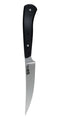
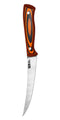
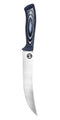
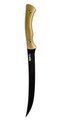
Our Boning Butcher (made in collaboration with the Bearded Butchers) uses MagnaCut steel and a 5 7/8-inch blade that’s 0.09 inches thick for the flex needed to follow curved bones. The Flathead Fillet has a 7 1/2-inch MagnaCut blade coming in at 0.097 inches and 4.45 ounces, built for long days on the water.
Carving Knife
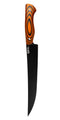
A carving knife is long (8–12 inches), thin, and designed for slicing cooked meats like roasts, turkey, and brisket. Its narrow profile reduces drag, and its length lets you cut in smooth strokes rather than sawing back and forth. The MKC Carving Knife has an 8 7/8-inch blade for maximum reach and an ergonomic composite handle to reduce cutting fatigue.
Cleaver
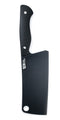
The cleaver is the heavy hitter. Its wide, thick blade splits poultry, cracks bones, and breaks down large cuts of meat. The weight does most of the work: lift and let gravity do the rest. Our Cattlemen Cleaver 2.0 weighs 11.89 ounces with a 6 1/4-inch MagnaCut blade at 0.17-inch thickness.
Santoku and Nakiri
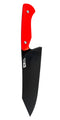
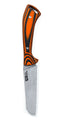
Japanese kitchen knives take a different approach than Western types of knives. The santoku (“three virtues”) handles slicing, dicing, and mincing with a flatter profile that encourages an up-and-down chopping motion rather than rocking. Our Smith River Santoku has a 6 3/4-inch MagnaCut blade with a PVD finish and a durable G10 handle.
The nakiri is a vegetable specialist. Its rectangular blade makes full contact with the cutting board, producing clean cuts through onions, carrots, and leafy greens with a straight downward motion. If vegetables make up a big part of your cooking, a nakiri will noticeably speed up your prep work.
Other Japanese types of knives, like the deba (fish butchery), yanagiba (sashimi), and usuba (professional vegetable work), serve specific roles in traditional Japanese kitchens but are less common in Western home cooking.
Western vs. Japanese Kitchen Knives
|
Aspect |
Western Style |
Japanese Style |
|
Steel hardness |
54–58 HRC (softer, more flexible) |
60–67 HRC (harder, holds edge longer) |
|
Edge angle |
20–25 degrees per side |
10–15 degrees per side |
|
Blade thickness |
Thicker, more durable |
Thinner, more precise |
|
Weight |
Heavier, uses momentum |
Lighter, emphasizes control |
|
Maintenance |
Less frequent sharpening |
More frequent honing |
|
Bevels |
Double-bevel (both sides) |
Often single-bevel |
Western knives forgive rough use. Japanese knives reward good technique with cleaner cuts and less effort. At Montana Knife Company, we use MagnaCut steel in most of our kitchen knives for a reason: it combines stainless corrosion resistance with edge retention that rivals traditional Japanese steels. The blade performs like a Japanese knife but can handle the demands of a Western one.
Outdoor and Hunting Knives
In the field, a knife isn’t just a tool. It’s safety equipment. The types of knives hunters and outdoorsmen carry break down into three broad categories:
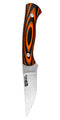
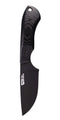
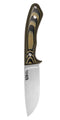
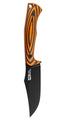
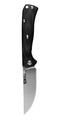
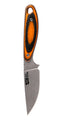
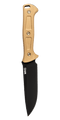
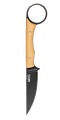
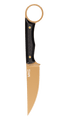
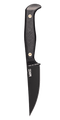
- Hunting knives with a drop-point blade handle field dressing, caping, and general camp tasks. Our Blackfoot 2.0 uses a 3 3/8-inch MagnaCut blade at 3.6 ounces, sized to field dress an elk but light enough for a mountain goat hunt. The Speedgoat 2.0 drops to 1.76 ounces for ounce-counting backcountry hunters.
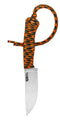
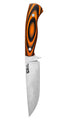
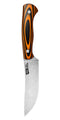
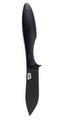
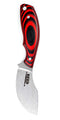
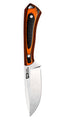
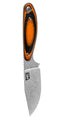
- Skinning knives feature a wide belly and swept blade designed to separate hide from meat with minimal waste. Our Stonewall Skinner has a 4 5/8-inch MagnaCut blade and weighs in at 5.53 ounces for larger game.
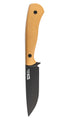
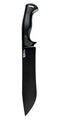
- Bushcraft knives handle heavier camp tasks: batoning firewood, carving stakes, building shelters. The Marshall Bushcraft makes use of a 7 5/8-inch blade and weighs in at 9.9 ounces, with the thickness (0.17 inches) required for hard use.
Everyday-Carry (EDC) Knives
EDC knives live in your pocket and handle the tasks that come up between the kitchen and the field: opening packages, cutting cord, slicing an apple, trimming a loose thread, etc. They break down into two types of knives:
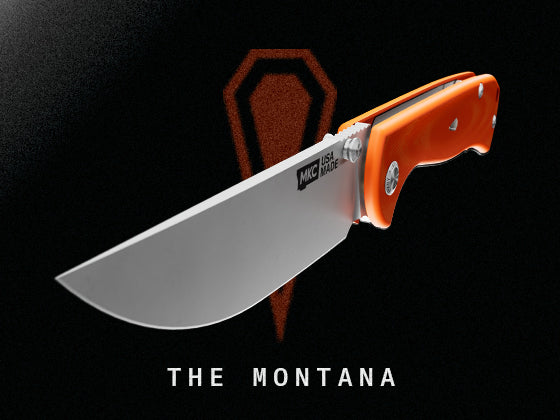
- Folders hinge closed for safe, compact carry. The Montana is our first production folder, with a 3.25-inch MagnaCut blade, G10 scales, titanium hardware, and an inset liner lock, weighing just 2.84 ounces.
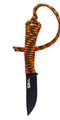
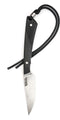
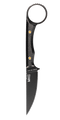
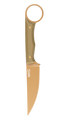
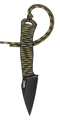
- Fixed-blade EDC knives skip the hinge for added strength. Our Mini Speedgoat 2.0 weighs just 1.18 ounces with a 3-inch MagnaCut blade and a Kydex sheath that clips to a belt or a pack strap.
Blade Shapes and What They Mean
Blade shape and knife type often overlap, but they aren’t the same.
A chef’s knife always has a curved belly because its rocking motion demands it, and a hunting knife almost always runs a drop point because the strong tip and slicing belly suit field dressing. But a folder can come in a drop point, clip point, tanto, or sheepsfoot, depending on how you plan to use it, and a fixed-blade EDC can borrow a trailing point from the skinning-knife world if slicing is the priority.
Knowing both the type of knife you need and the blade shape that fits your task narrows the field.
A Quick Steel Primer
Steel determines how a knife performs, how long it holds an edge, and how much maintenance it needs.
Carbon steel (e.g., 52100) takes the sharpest edge and is easy to resharpen, but it rusts without regular oiling and drying. Many field knives use carbon steel because in the backcountry, sharpness matters more than corrosion resistance.
Stainless steel (e.g., AEB-L, 440C) resists corrosion and handles kitchen moisture well, but traditionally doesn’t get quite as sharp as carbon steel and can be harder to resharpen.
For a balance between the two, choose MagnaCut. It’s a powder metallurgy steel developed by Larrin Thomas that resists corrosion like stainless, holds an edge like high-end carbon, and resharpens more easily than most premium steels. We use it across our kitchen, hunting, and EDC lines because it performs in wet, acidic, and high-use environments without carbon steel’s maintenance headaches.
How to Choose and Build a Starter Knife Set
With so many types of knives, you may be tempted to buy a full block set right away. But quality beats quantity, and three excellent knives outperform 10 mediocre ones.
Start with these, in this order:
- Chef’s knife (the foundation for 90% of kitchen tasks)
- Paring knife (for detail work the chef’s knife can’t handle)
- Serrated bread knife (no other type of knife does this job)
- Boning or fillet knife (add this early if you hunt or fish)
- Utility/petty knife (fills the gap between a chef’s knife and paring knife)
From there, add knives based on what you cook. Process a lot of meat? Get a cleaver. Cook vegetable-heavy meals? A santoku or nakiri makes sense. Work with whole fish regularly? A dedicated fillet knife pays for itself fast.
For the field, a single drop-point hunting knife and a compact folder cover most tasks. As your needs grow, expand to a dedicated skinner or bushcraft knife.
Knife Care and Maintenance
All types of knives need proper care, but kitchen blades face unique challenges from moisture, food acids, and heavy use.
Cleaning: Wash by hand immediately after use. The dishwasher is off limits, as high heat, harsh detergents, and jostling against other items damage edges and handles.
Storage: Use a magnetic strip, knife block, or blade guards. Never toss knives loose in a drawer.
Cutting surfaces: Hard surfaces like glass, granite, and ceramic chip and dull edges. Use wood or plastic cutting boards.
Honing: Run your blade along a honing steel before each use. This realigns the edge without removing material.
Sharpening: When honing no longer restores cutting ability, sharpen with a whetstone or our Field Knife Sharpener. Sharpen every few months depending on usage.
Protection: After cleaning, a thin coat of MKC’s food-safe Blade Wax prevents moisture damage on both kitchen and field knives.
Frequently Asked Questions About Types of Knives
What are the three most common types of knives?
A chef’s knife, a paring knife, and a serrated bread knife are the three most common knives. Those cover the vast majority of kitchen tasks, and most professionals name them as the core of any starter set.
What’s the most versatile knife you can own?
The chef’s knife. It’s an 8-inch chef’s knife that handles chopping, slicing, dicing, and mincing. If you can own only one kitchen knife, make it a quality chef’s knife.
What’s the difference between a boning knife and a fillet knife?
A boning knife is stiffer and built for separating meat from bone on poultry and game. A fillet knife is thinner and more flexible, designed to follow the contours of fish bones without crushing the flesh.
What types of knives do hunters need?
At minimum, a prepared hunter needs a drop-point hunting knife for field dressing and a compact folder for camp tasks. Add a skinning knife for large game and a bushcraft knife if you spend extended time in the backcountry.
What steel is best for kitchen knives?
It depends on your priorities. Carbon steel takes the sharpest edge, but rusts without care. Stainless resists corrosion but may not get as sharp. MagnaCut combines corrosion resistance with high-end edge retention, which is why we use it across most of our kitchen and field lines.
How often do kitchen knives need sharpening?
Most home cooks need to sharpen every three to six months. Hone before each use with a honing steel to extend the time between full sharpenings. Professional kitchens with heavier daily use will need to sharpen more frequently.
by Josh Smith, Master Bladesmith and Founder of Montana Knife Company