





















For me, venturing into the wilderness alone is about disconnecting. I turn off my phone, leave the distractions behind, and go with one intention: enjoy the wild on my own terms.
But the more remote you are, the less likely anyone is to find you if a situation turns bad.
The good people at Fieldcraft Survival teach a simple motto: You are your own first responder. No one is coming to save you. But if you’re prepared, you can save yourself.
These wilderness survival tips will help you do exactly that, whether you’re on a solo backcountry hunt, a multi-day hike, or an overnight fishing trip gone wrong.
The Wilderness Survival Mindset
The number one threat in a wilderness survival emergency isn’t cold, dehydration, or starvation. It’s panic.
When people get lost, they tend to make the worst possible move. They run. They make snap decisions. They burn energy on problems that don’t exist yet, and they ignore the ones that do.
The first survival skill you need isn’t physical. It’s mental.
Stay calm. Breathe. Accept the situation for what it is, then break it into small, solvable problems. If you can get control of your thoughts, you’ve already won more than half the battle.
Fear isn’t the enemy here. Fear is information. It tells you to pay attention. The real danger is letting fear make your decisions for you.
Once you accept your situation and start thinking clearly, your training kicks in, and your instincts work for you rather than against you.
Know Your Wilderness Survival Priorities
Not all wilderness survival needs rank equally.
Even if you forget every other one of these wilderness survival tips, remember this order: shelter, water, fire, food, signaling. That’s the survival priority pyramid, and it drives every decision you make in the field.
You can survive about three hours in harsh weather without shelter, roughly three days without water, and up to three weeks without food. That order dictates how you spend your time and energy.
Most people think about food first. But a person lost in Montana’s mountains in October can die of exposure in a single night. Meanwhile, that empty stomach won’t be a real threat for days. Prioritize accordingly.
Wilderness Survival: Build or Find Shelter Before You’re Cold
Wilderness survival often comes down to retaining heat. Your body loses warmth through conduction (contact with cold ground), convection (wind), radiation (exposed skin), perspiration (sweat), and respiration (breathing cold air).
Remember the acronym “IOU”: Inside, Over, and Under.
Inside good clothing, you retain body heat. Over your head, a barrier keeps precipitation from making you cold and wet. Under you, insulation stops the ground from stealing your warmth.
In cold environments, keep your shelter small. Your body heat is the primary heat source, so a smaller space warms up faster. A simple lean-to stuffed with leaves, pine boughs, or other debris can keep you alive through a brutal night. Focus on insulation, not architecture.
In hot, arid terrain, the game flips. You need shade and airflow, not insulation. Dig a few inches into the soil to reach cooler ground, build a simple shade structure over it, and rest during the hottest part of the day.
Heat exhaustion and dehydration can be just as lethal as hypothermia; the environment changes, but the need for shelter doesn’t. That’s why shelter tops every list of wilderness survival tips.
Wilderness Survival Tips: Find, Treat, and Carry Water in the Wild
Water is the second priority in any wilderness survival situation. Before you head out alone, know how to find water, collect it, treat it, and carry it.
Developing a situational awareness of your terrain is the starting point. Watch how the land moves. Follow valleys and low spots.
Observe animals and insects; they tend to move toward water sources early and late in the day. Certain plants, like cattails, cottonwoods, and willows, signal the presence of water nearby. Dig a seep hole next to them and wait for moisture to collect.
Once you find water, treat it. Clear-looking mountain streams can still carry Giardia and other parasites. Boil it for at least one minute (longer at higher elevations), treat it chemically with purification tablets, or filter it. Having multiple treatment methods gives you a backup when one fails.
Then carry it, both in a vessel and in your body. Sip water steadily throughout the day instead of waiting until you’re thirsty. Thirst is a late warning sign, not an early one.
Move efficiently to conserve sweat, too. The less you sweat, the less water you lose.

Wilderness Survival Tips for Starting a Fire in Any Condition
If you can learn one-handed fire starting, you’ll be well-trained for a bad wilderness survival scenario. Most people break their fall with their arms, so a hand or wrist injury in the backcountry isn’t uncommon. Knowing how to light a fire with just one hand is a real advantage.
Of course, it’s a lot easier with two. What matters most is carrying more than one fire-starting method.
A lighter is cheap and reliable. A ferrocerium rod works wet and lasts thousands of strikes. Waterproof matches serve as backup. Carry all three, and you’ve got options when conditions get ugly.
Learn your tinder, kindling, and fuel. Fine, dry material (birch bark, dry grass, cotton balls coated in petroleum jelly) catches the spark. Small sticks and twigs build the flame. Larger logs sustain it. Collect twice as much fuel as you think you need; wet nights burn through wood fast.
Fire does more than warm you. It purifies water, cooks food, signals rescuers, dries wet clothing, and keeps your morale from slipping. Of all the survival tips on this list, this one might save your life the fastest: a good fire can be the difference between a hard night and your last one.
Wilderness Survival Tip: How to Feed Yourself Without Chasing Your Dinner
Plants are the most dependable food source in the wild. They won’t run from you or jump off your hook.
With good edible plant knowledge, you can always find a snack. Eating 100 calories every hour can be more efficient than spending six hours trying to catch one trout. You might burn more calories chasing that fish than the fish gives you back.
That said, here’s one of my most valuable wilderness survival tips: Never eat a plant you can’t confidently identify. A small amount of the wrong species can put you in worse shape than an empty stomach. Focus on learning a handful of local edible plants well rather than memorizing hundreds from a field guide.
Knowing edible and medicinal plant knowledge is a true wilderness survival skill. It pays off every single time, in every season, in every type of terrain. And that makes it one of the best survival tips I can pass along.
Wilderness Survival Tips for Communication and Navigation
One of the most overlooked survival tips is also the simplest: Tell someone where you’re going before you leave. Communication isn’t about how well you talk. In the field, communication means being able to signal for help and making sure someone knows where you are.
Share your route, your expected return time, and what to do if you don’t check in. That simple step can cut search-and-rescue response time.
Carry a whistle and a signal mirror. Both are lightweight, proven methods that have kept people alive for decades. A whistle carries farther than a shout, and aircraft can spot a mirror signal from miles away.
For navigation, I want every tool I can get: a GPS unit, a map, and a compass. I don’t pick one; I carry all three. Even the most experienced navigator can get turned around. If you only want to use a map and compass, a GPS is a hidden backup. If you only want a GPS, a map and a compass don’t need batteries.
Use the sun and stars to orient yourself. Follow water downstream; streams lead to rivers, and rivers lead to people. Mark your trail as you go so you can backtrack if a route doesn’t work out.
Wilderness Survival Tip: Carry the Right Gear and Know How to Use It
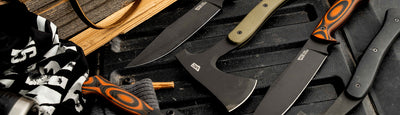
A good fixed blade is the single most versatile tool in a wilderness survival situation. Use it to cut different types of material, process your firewood, prepare food, build shelter components, and create other tools like spears or stakes.
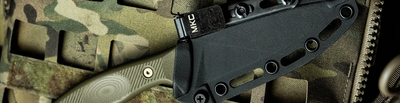
We built the MKC Fieldcraft Survival Knife with this kind of use in mind. Designed with the survival experts at Fieldcraft Survival, it features a 3 1/2″ MagnaCut stainless steel blade on a full-tang construction with G10 handle scales that won’t absorb blood or moisture. At just 3.78 oz with an 8 3/8″ total length, it’s light enough for an everyday carry and tough enough for bushcraft-style work in the backcountry.
The blade is only part of the equation. Know your cordage, too. You don’t need to memorize every knot in the book, but learn a bowline and a double half hitch. A good knot keeps your tarp in place during a storm, and a bad one proves the old adage: If you don’t know how to tie knots, you tie lots.
Basic medical knowledge matters here, too. Carry a tourniquet and wound-packing gauze, and know how to use them. But be just as ready for the small stuff: cuts, burns, and blisters. Plenty of people can apply a tourniquet, but they freeze when dealing with the little injuries that come from knives and campfires.
Wilderness Survival Tips for Packing the Right Kit
Preparation separates a hard day from a lethal one.
Most wilderness survival tips focus on what to do during an emergency, but your best move happens before you leave the trailhead. Research the terrain and weather conditions for your specific area before you go. A wilderness survival kit for Montana’s mountain ridges in October looks different from one you’d pack for a desert hunt in Arizona.
For alpine and northern environments, prioritize layered clothing, waterproof shells, and insulation. In desert terrain, pack sun protection, extra water capacity, and light-colored, breathable fabrics. Coastal and forest environments call for rain gear, insect protection, and moisture-wicking base layers.
Your baseline survival kit needs a reliable fixed-blade knife, a lighter and backup fire starter, a headlamp with extra batteries, a water purification method, a basic first-aid kit with a tourniquet, a signal mirror and whistle, a length of paracord (at least 25 feet), and an emergency shelter like a bivy or lightweight tarp.
Put that headlamp on just before sundown. Staying ready during daylight is easy; doing it after dark is a different game entirely. Know how much sunlight you have left and plan your camp setup accordingly.
Wilderness Survival Tip: Learn to Smooth It, Not Rough It
There’s an old saying: If you’re going to be dumb, you’d better be tough.
People always talk about “roughing it” in the outdoors. But if you’re constantly roughing it, you may never learn how to smooth it. If you’re constantly being tough, you may never become smart.
Isn’t it easier to use a full-size saw than the tiny one on a multi-tool? Won’t you eat better if you bring food instead of chasing dinner down a trail? Won’t you sleep better on a sleeping pad than on a pile of dirt?
Learn to smooth it. Make your wilderness survival skills a lifestyle, not a checklist. When a situation turns sideways, you simply continue doing what you’ve always done because you’ve trained for emergencies.
You’ve got this.
Frequently Asked Questions About Wilderness Survival
What is the most important wilderness survival skill?
The most important skill is staying calm and thinking clearly. Panic leads to poor decisions that burn energy and make a bad situation worse. Once you control your mindset, the physical skills (building shelter, finding water, starting a fire) become easier to execute.
What should I carry in a basic wilderness survival kit?
Pack a fixed-blade knife, lighter and backup fire starter, headlamp, a water purification method, first-aid supplies with a tourniquet, signal mirror, whistle, paracord, and emergency shelter. Tailor additional items to your specific environment and trip length.
How long can you survive without water in the wilderness?
Most people can last roughly three days, though heat, exertion, and altitude can shorten that timeline. Always prioritize finding and purifying water after you’ve secured shelter.
What are the survival priorities in order?
The order is shelter, water, fire, food, and signaling. Most people call this the survival priority pyramid. Shelter comes first because exposure can turn fatal in as little as three hours, long before dehydration and hunger become threats.
What is the best knife for wilderness survival?
Look for a full tang fixed blade with a drop point profile in a corrosion-resistant steel. We designed the MKC Fieldcraft Survival Knife (3 1/2″ Magnacut blade, 3.78 oz, G10 handle) for this purpose.
by Josh Smith, Master Bladesmith and Founder of Montana Knife Company
with Kevin Estela, Best-Selling Author and Director of Training for Fieldcraft Survival