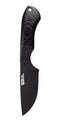
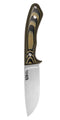
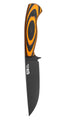
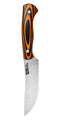
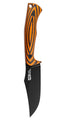
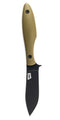
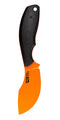

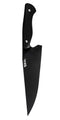
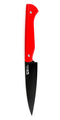
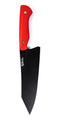
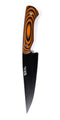
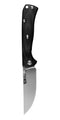
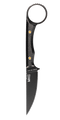
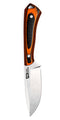
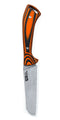
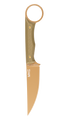
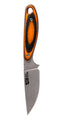
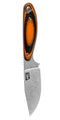
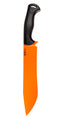






Most outdoorsmen use “bushcraft” and “survival” interchangeably. Walk through any knife aisle or scroll any online retailer, and you’ll see both terms slapped on the same category page as if they’re interchangeable.
But the two terms aren’t interchangeable. Once you understand the differences between a bushcraft knife vs. a survival knife, you’ll never look at a fixed blade the same way again.

Quick Answer: Bushcraft Knife vs. Survival Knife
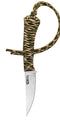
A bushcraft knife is built for living comfortably in the woods on your own terms. It excels at carving, fire prep, and campcraft.
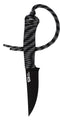
A survival knife (also called a fieldcraft knife) is built to get you out of the woods alive. It’s made to take abuse: batoning, prying, digging, breaching, and general hard use when it might be the only tool you’ve got.
The two look similar at first glance, but their blade geometry, handle shape, sheath design, and intended use couldn’t be more different.
What a Bushcraft Knife Is Built For
Bushcraft, sometimes called woodcraft, traces its roots to European outdoor traditions. Guys like Ray Mears helped codify it in the ’90s and early 2000s, turning it into a legitimate discipline with its own tools, techniques, and culture.
The word itself breaks it down: bush + craft. It’s the craft of going into the woods and learning how to live there, not escape or survive a crisis.
Bushcraft is proactive, not reactive. You’re going in with the intention of building a shelter, carving tools (spoons, mallets, traps), prepping fire, and generally making your life more comfortable with as little gear as possible.
You’re not in a panic. You’re on vacation. A bushcrafter’s goal is to see how long they can stay and have fun.
If you’ve ever watched the History Channel show “Alone,” you’ve probably noticed the pattern: competitors who go in with the mindset to complete the mission and get out tend to burn out fast. Once the mission mindset fades, they don’t know what to do with themselves.
The competitors who thrive are the ones who’ve trained themselves to enjoy being out there, to keep improving their camp, to find energy in the simplicity.
That’s bushcraft in a nutshell. You bring a tarp instead of a tent, and you build a heat reflector instead of cranking a propane heater. You intentionally strip away comfort so you can learn to create it from scratch.
What a Survival Knife Is Built For
Survival and fieldcraft are closely related, and we use them almost interchangeably. Fieldcraft is how you survive. Survival is what you’re trying to do.
Other related terms include battlecraft and tradecraft, and the roots go back at least to World War II. If you dig into the old British military training manuals, you’ll find fieldcraft right alongside sniper training, concealment techniques, and distance estimation using natural landmarks.
The goal of fieldcraft is to get in, complete the mission, and get out alive. You aren’t there to enjoy the scenery. You’re either performing a mission, gathering information, or dealing with a situation where your plane went down, and you need to find your way back to civilization without being detected.
Concealment drives the approach. You don’t build a big campfire, and you don’t stack wood for a heat reflector.
If you need warmth, you dig a small fire hole, throw your poncho over it, warm up for five minutes, put it out, and move. Zero smoke, zero smell, zero trace.
The gear list reflects this mentality. You aren’t carving your fork from a branch. You’re packing a titanium spork.
You aren’t spending an afternoon building a shelter. You’re throwing up a low-profile tarp in camo and hoping nobody spots you. Pilots get this kind of training because if they go down in hostile territory, they need to move without giving away their position.
YouTube channels like Garand Thumb illustrate the difference perfectly. Their series “Becoming Deadly in the Mountains” shows a completely different world from a bushcraft video. The focus is movement, evasion, and efficiency.
One example: When tracking dogs are behind you, you run through the blackberry bushes because the dogs won’t like it. You’re intentionally making your life miserable to stay alive.
How Blade Geometry Separates a Bushcraft Knife From a Survival Knife
This is where the bushcraft knife vs. survival knife conversation gets technical, and where the real differences show up in the steel.
The Bushcraft Knife: Scandi Grind
A true bushcraft knife uses a zero-edge Scandi grind with no secondary bevel. European brands like Mora and Fallkniven popularized this approach, and of all the bushcraft knife features that define the category, the Scandi grind is the most iconic.
Picture a simple V shape. The bevel goes straight to the cutting edge with no additional sharpening angle added on top. That’s a Scandi grind.
This matters for two big reasons.
First, a Scandi grind lets thin knives punch above their weight. That edge geometry makes the blade surprisingly tough for its size. You can baton firewood, split kindling, and handle camp tasks that seem too big for a knife that thin. It’s like carrying a pocket hatchet.
Second, it’s incredibly easy to sharpen. The flat bevel acts as its own built-in sharpening guide. Lay it flat on a stone (even a piece of limestone you found on the ground) and run it back and forth.
You don’t have to guess at angles, and you don’t need to be an expert. You can get a Scandi edge back to sharp even with cold hands in the middle of the woods.
This simplicity is also why Dutch Bushcraft Knives and the broader bushcraft community raised an eyebrow when some knife manufacturers released a “bushcraft” knife with a tanto blade profile. A tanto has multiple angles that are a pain to sharpen in the field. For the bushcraft crowd, that kind of complexity defeats the purpose.
The Survival Knife: Saber Flat Grind
Fieldcraft knives typically use a saber flat grind or, in some cases, a convex grind. The geometry is finer and thinner than a Scandi, which means it can get sharper faster.
The trade-off is that a saber grind isn’t as forgiving for field sharpening. That’s fine for the intended user, though. A person in a survival situation isn’t going to sit on a limestone rock for 20 minutes getting a perfect edge.
They need a blade they can put to work immediately. If it goes a little dull, the thinner geometry still cuts well enough to get the job done.
The tip profile tends to be more aggressive, too. It’s “stabbier,” to put it bluntly, because a survival knife might need to puncture, pry, or breach materials. A bushcraft knife rarely faces those demands.
Bushcraft vs. Survival Knife Handle Design: Round vs. Flat
Bushcraft Knife Handles Are Rounded
A bushcraft knife handle is rounded, almost like a bike grip. That’s because bushcrafters constantly change their grip throughout the day.
They’ll rotate the blade outward and pull a piece of wood toward them for massive carving power. They’ll choke up for fine detail work, then shift to a full grip for batoning.
That constant rotation is why most traditional bushcraft knives don’t have a guard, either. A guard gets in the way when you’re spinning the knife around in your hand. (In some European countries, a guard also classifies the knife as a weapon rather than a tool, adding legal motivation to the design choice.)
Survival Knife Handles Are Flat
A survival knife handle is flat-sided and grippy, built for gross motor skills. You’re cold, you’re wearing gloves, and you’ve been running. You need to grab it and go.
Flat handles lock into your hand and won’t spin or roll during hard use. Modern fighting and tactical knife techniques favor flat handles for this reason: You can index your thumb on the spine, get a solid perch, and the blade stays exactly where you put it.
Concealment plays a role here, too. A flat-handled knife sits close to your body, either under a coat or tucked into a waistband. A rounded bushcraft handle sticks out, and when you’re trying to stay low-profile, every fraction of an inch counts.

Bushcraft Knife vs. Survival Knife Steel Choice
One of the few areas where bushcraft knives and survival knives overlap is steel selection. Both benefit from a tough, resilient steel that won’t snap under hard use.
Steels like 1095, 3V, and 52100 are popular choices for both. They don’t offer the extreme edge retention you’d get from a premium stainless, but they’re practically impossible to break. The best bushcraft knife and the best survival knife both need a steel you can beat on all day.
The key difference is in blade thickness. Fieldcraft knives tend to run slightly thicker blade stock for added spine strength. A bushcraft knife can get away with being a bit thinner because the Scandi grind geometry adds toughness without extra steel.
Bushcraft Knife Sheaths vs. Survival Knife Sheaths
Sheath design is another big differentiator that most people overlook when shopping for the best bushcraft knife or survival knife.
A bushcraft sheath is built for easy access. You pull the knife out, you put it back, and the sheath stays out of your way.
Many feature a “dangler” attachment that lets the sheath swing freely when you’re sitting on a stump or log so it doesn’t dig into your hip. Comfort matters when you’re spending all day at camp.
A fieldcraft sheath is jump rated. That means it has secondary retention, a locking mechanism, or a strap that keeps the knife locked in place no matter what. If you bail out of a helicopter, that blade isn’t going anywhere.
These sheaths also tend to feature MOLLE-compatible attachments and low-visibility colorways to match the concealment-first philosophy.
Where a Bushcraft Knife Outperforms a Survival Knife (and Vice Versa)
Best Bushcraft Knife Tasks:
Fine carving and campcraft. Spoon carving, feather sticks, making tools and traps. The Scandi grind and rounded handle give you the control and range of motion to do detailed work all day without fatigue.
Fire prep using the spine. Many bushcraft knives feature a sharpened spine specifically for striking a ferro rod. That same sharpened spine works for scraping tinder off bark without dulling your main edge.
Long-term comfort work. If you’re spending days or weeks in the woods by choice, a bushcraft knife is designed for sustained, enjoyable use.
Best Survival Knife Tasks:
Hard abuse. Digging fire holes, prying open doors, breaching barriers, and batoning large rounds of wood. The thicker blade stock and saber grind handle punishment that would make a bushcrafter cry.
On-the-move survival. When you’re covering ground fast, evading, and need to hack through obstacles, a fieldcraft knife’s aggressive geometry and secure grip get the job done.
Being the one tool when the situation goes sideways. If you can only carry one blade and your life depends on its versatility, a survival knife’s durability and multi-purpose design earn the spot.
How to Choose the Best Bushcraft Knife or Survival Knife for You
The answer comes down to one question: Are you going into the woods to stay, or are you going into the woods to get out?
If you’re heading out to build a shelter, carve camp tools, prep firewood, and enjoy the process of living with less, grab a bushcraft knife. If you’re preparing for scenarios where efficiency, durability, and getting home alive are the priorities, a survival knife is the better pick.
Once you understand the bushcraft vs. survival knife distinction, you’ll never confuse the two again.

Frequently Asked Questions About Bushcraft Knives and Survival Knives
Is a bushcraft knife the same as a survival knife?
No. A bushcraft knife is designed for comfort-focused woodcraft: carving, fire prep, shelter building, and long-term camp living. A survival knife is designed for hard use and efficiency in high-stress scenarios.
The blade geometry, handle shape, sheath retention, and intended mindset are all different.
What grind is best for a bushcraft knife?
A Scandi grind is the traditional choice for a bushcraft knife. The flat bevel acts as a built-in sharpening guide, making it easy to maintain in the field. It also lets thinner blades handle heavier tasks than you’d expect.
Can I use a bushcraft knife for survival?
You can, and plenty of people do. SERE instructors have been known to carry bushcraft-style knives. But a purpose-built survival knife handles heavy abuse (prying, digging, breaching) better because of its thicker blade stock, more aggressive geometry, and secure-grip handle design.
What steel is best for a bushcraft knife?
Tough steels like 1095, 3V, and 52100 are popular for bushcraft knives. Edge retention matters less than toughness in this category, because a Scandi grind is so easy to resharpen in the field.
Why doesn’t a bushcraft knife have a guard?
The rounded, guardless handle lets you rotate the knife freely in your hand for different carving grips. In some European countries, a guard also classifies the blade as a weapon instead of a tool. Over time, the guardless design became part of bushcraft culture and identity.
What makes a good survival knife?
A good survival knife features a saber or flat grind, a flat-sided handle with a secure grip, a guard for safe stabbing and prying motions, thicker blade stock, and a sheath with secondary retention. It’s built to be your one tool when the situation falls apart.
What bushcraft knife features matter most?
The most important bushcraft knife features are a Scandi grind (or modified Scandi with a secondary bevel), a rounded handle for multiple grip positions, a sharpened spine for striking ferro rods and scraping tinder, and a sheath that allows easy access. The blade typically runs three to five inches for better carving control.
by Josh Smith, Master Bladesmith and Founder of Montana Knife Company