











The key to sharpening a knife with a whetstone is finding the right angle, keeping your stone wet, and creating a burr on the edge. Master those three factors, and you’ll maintain a razor-sharp edge on any blade.
As a Master Bladesmith, I’m often asked how to sharpen a knife with a whetstone. If you’re having trouble, your skills may not be the problem. The problem might be the knife itself.
Why Some Knives Resist Sharpening With a Whetstone
When you feel the edge of a knife from the spine downward, you may feel some thickness behind the edge.
That heavy geometry makes the blade fight you on the stone, no matter how good your technique is. We design our MKC blades with thinner edge geometry so you can resharpen them yourself.
Steel hardness plays a role, too. A blade at 67 HRC on the Rockwell scale is extremely brittle. To keep it from breaking, the manufacturer will make it very thick, which means the blade resists sharpening. Our blades use steels like MagnaCut and 52100 to balance hardness and sharpening ability.
Every knife ever made will go dull at some point, including ours. Send it back to us, and we’ll resharpen it for free through our MKC Generations® program.
But can you resharpen your knife while you’re out in the field? Yes, if you know how to sharpen a knife with a whetstone.

Choosing the Right Whetstone
Before you learn how to sharpen a knife with a whetstone, you need to choose the right one. Not all whetstones perform the same, and understanding your options helps you get better results.
Water stones cut quickly and produce refined edges because of their softer composition. Soak them in water for five to 10 minutes until bubbles stop rising. Most professionals prefer these for kitchen and hunting knives.
Oil stones wear down more slowly. They also produce a toothier, more aggressive edge. If you prefer the “working edge” we use here at MKC, oil stones are a solid choice. Traditional Arkansas stones fall into this category.
Diamond stones cut the fastest and last the longest, and they excel on harder steels like MagnaCut. They cost more and can remove material quickly, so they’re better suited for experienced sharpeners.
Ceramic stones work well for maintaining already sharp edges and for finishing after coarser stones. They require no soaking and stay flat longer than water stones.
For most hunters and home cooks, a water stone between 1000 and 6000 grit covers 90% of sharpening needs. Our Work Sharp Whetstone Knife Sharpener has dual-grit (1000/6000) functionality with built-in angle guides at 15° and 17°.
Understanding Grit
The stone I use is generally between 600 and 1000 grit. This range works great for quickly sharpening hunting knives and chef’s knives alike. If your knife is in really bad condition, you might need to start on a stone between 220 and 400 grit, then finish on a finer stone.
Think of grit like sandpaper. Lower numbers cut more coarsely and remove more material, while higher numbers cut more finely and polish the edge:
- Coarse grits (120–400) are for damaged or extremely dull blades.
- Medium grits (600–1000) handle most routine sharpening.
- Fine grits (3000–6000) refine the edge after you’ve established it.
Finding Your Angle for Sharpening With a Whetstone
When sharpening a knife with a whetstone, people often get hung up on the angle. I generally tell knife owners it’s between 15 and 20 degrees.
A slight angle (around 15 degrees) lets the knife pass through the material more easily, but it means less steel behind the edge, which matters for aggressive work like chopping or contact with bone. A steeper angle (around 20 degrees) creates more of a wedge, with more steel supporting it.
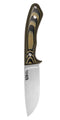
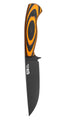
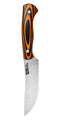
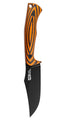
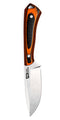
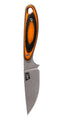
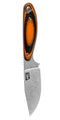
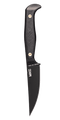
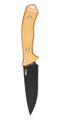
Shoot for 17 degrees, but anywhere between 15 and 20 works fine. Japanese kitchen knives and fillet knives do well at 15 degrees. Hunting knives like our Blackfoot 2.0 and Speedgoat 2.0 perform best at 17–20 degrees. Heavy-duty blades can go up to 25 degrees.
If you’re nervous about holding a consistent angle, many sharpeners come with built-in guides.
How to Sharpen a Knife With a Whetstone
When I sharpen a knife with a whetstone, I start at the stone’s top corner and move in what many would consider a “backward” direction. That means moving the blade across the whetstone away from the edge.
If I went “forward,” leading with the edge, I would end up rounding off the tip over time. Backward sharpening keeps that tip intact.
To sharpen, place two or three fingers behind the edge and apply pressure to the section you’re working on. Draw the blade across the stone in smooth, controlled strokes, working from tip to heel. Repeat five to 10 times, keeping your wrists locked and moving your arms from the shoulders.
As you sharpen one side, feel with your fingers on the opposite side. If you’ve done it right, you’ll feel a burr: a small wire of metal that forms along the edge. The burr feels like a thin ridge running along the cutting edge.
As you work, you’re cutting across the edge and pushing material to the other side. When you feel the burr along the entire blade’s length, you’ve created a new edge. This might take a few minutes on a dull knife. Keep at it until that burr runs from tip to heel.
Once you have a consistent burr, flip the knife and repeat on the other side. Work until you feel the burr flip back. Aim for roughly equal work on both sides to keep the edge centered.
How to Sharpen a Knife With a Whetstone: Removing the Burr
While the burr is a sign your sharpening has gone well, it eventually needs to come off. Otherwise, your knife won’t cut cleanly.
You can remove the burr by making light alternating passes on a fine stone, running the edge along a leather strop, or using a ceramic honing rod with firm pressure.
We carry a USA-made leather strop specifically for this purpose. Our Work Sharp Ceramic Honing Rod works well, too, and its 2000-grit surface helps maintain your edge between full sharpenings.
How to Sharpen a Knife With a Whetstone: Testing Your Edge
A knife that’s been properly sharpened with a whetstone slices through paper cleanly without catching or tearing. Hold the paper by one corner and draw your blade downward through it. If it catches at any point, that spot needs more work.
For a tougher test, try slicing a tomato. A sharp knife will bite into the skin under its own weight. If you have to saw back and forth, go back to the stone.
The arm hair test works, too. A truly sharp knife will shave hair cleanly, confirming you’ve achieved a polished, refined edge.
Common Mistakes to Avoid When Sharpening a Knife With a Whetstone
Changing your angle mid-stroke causes inconsistent edges. This usually happens when you sharpen with your wrists instead of your arms.
Lock your wrists and move from your shoulders, keeping your forearms parallel to the stone surface. If you catch yourself rocking, slow down and focus on smooth, controlled motions.
Not raising a burr means you haven’t actually reached the cutting edge. Many people give up too soon, assuming they’ve sharpened enough after a dozen strokes.
On a dull knife, you might need 50 or more passes before you feel that wire edge. If you don’t feel the burr, keep working.
Forgetting to remove the burr leaves you with a knife that feels sharp but won’t cut well. That wire edge folds over during use and creates a dull spot almost immediately. Always strop or deburr on a fine stone before testing your edge.
Letting your stone dry out creates uneven wear and can scratch your blade. The water or oil on your stone carries away metal particles and helps the abrasive cut smoothly. Keep a spray bottle or small container of lubricant nearby and re-wet the surface every minute or two.
Applying too much pressure removes material faster than necessary and makes angle control harder. You’re not trying to carve into the stone.
Light to moderate pressure works better than bearing down. Let the abrasive do the work.
Skipping grits seems like a time-saver, but it actually costs you more effort. Jumping from a 400-grit stone straight to 6000 means the fine stone has to remove all the deep scratches left by the coarse one. Progress through grits in order, and you’ll get a better edge in less time.
Maintaining Your Whetstones
Your stones need care, too. A neglected whetstone makes knife sharpening harder and produces worse results.
Flattening is essential for water stones. They dish over time, developing a concave surface that makes consistent angles impossible. You’ll know your stone needs flattening when you see a visible dip in the middle or when your blade rocks during sharpening.
Flatten after every two or three sessions by rubbing the stone against a diamond flattening plate under running water. For foolproof results, draw a pencil grid across the surface first, then flatten until all the pencil marks disappear.
Clean your stones after each use. Rinse your water stones under running water and scrub them with a stiff brush to remove metal particles.
Oil stones need a wipe-down with a clean cloth and an occasional soak in mineral spirits for deeper cleaning. Ceramic stones can glaze over with steel particles, which reduces their sharpening ability. Scrub them with an abrasive cleanser like Bar Keeper’s Friend to restore the surface.
Storage matters more than people think. Let water stones dry completely before putting them away. Trapped moisture can crack the stone in cold temperatures or promote mold growth. Store them flat in a dry location.
Oil stones are more forgiving, but do best when kept in a box or wrapped in cloth to prevent dust buildup. Diamond stones just need to be rinsed and stored flat.
Recommended Products for Sharpening a Knife With a Whetstone
We’ve tested countless sharpeners over the years. For beginners, our Work Sharp Whetstone Knife Sharpener combines 1000/6000 grit stones with angle guides. It’s an all-inclusive package for beginning and experienced sharpeners alike.
For users who want a surefire result, our HORL®3 Sharpener uses a rolling mechanism that maintains a perfect angle automatically. In the field, our MKC Field Knife Sharpener saves space while touching up your edge between hunts, and our MKC Blade Wax protects your blade from oxidation after sharpening.
Frequently Asked Questions About Sharpening a Knife With a Whetstone
How often should I sharpen my knife?
Most hunters can go a full season with occasional touch-ups. Sharpen when you notice the blade dragging rather than cutting.
Do I need to soak my whetstone every time?
Water stones need soaking before each use. Splash-and-go stones just need surface water. Diamond and ceramic stones work dry.
Should I sharpen my new MKC knife right away?
No. Our knives ship with a “working edge,” an aggressive, toothy edge that cuts effectively and holds up to use. It’s ready to go out of the box.
Use a Whetstone to Keep Your Blade Working for Generations
Once you learn how to sharpen a knife with a whetstone, you’ll wonder why you ever thought it was difficult. Taking care of your knife means respecting the craftsmanship that went into it and ensuring it serves you for decades to come.
When sharpening your knife with a whetstone, find your angle, feel for the burr, and take your time. Your knife will thank you for it.
by Josh Smith, Master Bladesmith and Founder of Montana Knife Company