








I’ve spent almost 22 years in law enforcement, 21 of them with the Seattle Police Department. In that time, I worked patrol, a proactive unit, major crimes, undercover, and training.
A knife gets overlooked on a lot of duty belts. After two decades on the job, I’d tell any officer it’s one of the most important tools you can carry.
Finding the best police knife for your size, your department’s requirements, and your carry setup takes real thought, and those decisions look different from the inside of a patrol vest.

Why I Carry a Fixed Blade as My Duty Knife
The case for a fixed blade over a folder comes down to speed and reliability. In an emergency, you can’t afford to use two hands or fumble with a locking mechanism. A fixed blade comes out ready to use the moment you draw it.
That matters more than most people imagine until they’re in a situation where it counts. If you’re managing a scene, holding a radio, or hands-on with a subject, the best police knife has to deploy with one hand. A folder adds a step at exactly the wrong moment.
I carry a straight-edge blade rather than a serrated one. When you’re in a high-intensity situation, whether that’s emergency first aid or a confrontation, a straight edge gives you more control over each cut. Precision matters when you’re working fast in a confined space.
When My Police Knife Made the Difference
The most critical time I reached for a knife on duty wasn’t a confrontation. It was a car accident. People were trapped in their seatbelts, and we couldn’t free them to start CPR.
Seatbelts are deceptively strong, and when they’re pulled tight against a person’s body, you have almost no room to work. I needed a blade that would cut cleanly and quickly in a confined space, with a handle I could control under pressure.
A dull blade or an unstable grip fails you at exactly that moment.
What to Look for in the Best Police Knife
Corrosion resistance is non-negotiable. Officers work in every weather condition, and a blade that rusts or loses its edge after a few months in the field isn’t dependable.
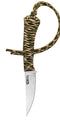
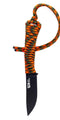
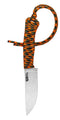
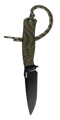
The handle material is just as important as the blade. Body fluids are part of this job, and your handle has to be fully cleanable. Paracord wraps and similar textured materials trap contaminants.
I’ve thrown equipment away after shifts where I couldn’t get it fully clean. At hundreds of dollars per piece, that’s not an outcome any officer wants.
One-hand access is a requirement, not a preference. Size matters, too. A knife that sticks out on your uniform is a liability in close-contact situations.
Anyone you’re struggling with can see it and grab for it. The best police knife for duty carry stays inconspicuous and accessible to you at the same time. I’m a smaller officer, and keeping my knife out of sight on my uniform is a safety decision, not a cosmetic one.

Why the Battle Goat Is My Best Police Knife Pick
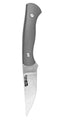
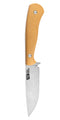
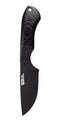
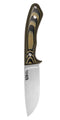
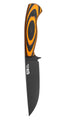
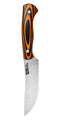
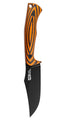
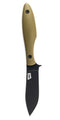
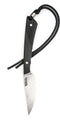
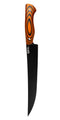
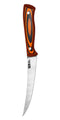
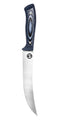
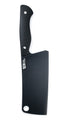
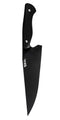
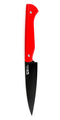
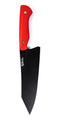
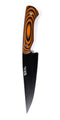
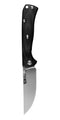
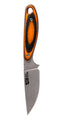
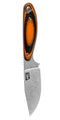
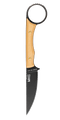
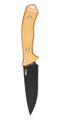
The first time I handled the Montana Knife Company Battle Goat, the ergonomics stood out immediately. Most knives I’d used before were too rigid, too heavy, or shaped in a way that never quite fit my hand. The Battle Goat fit right away.
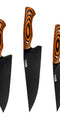
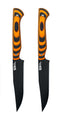
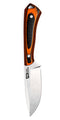
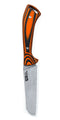
The G10 handle has a linear angle texture that holds grip in wet conditions. It doesn’t need a paracord wrap, so it’s fully cleanable: I can wipe it down completely and know it’s actually clean.
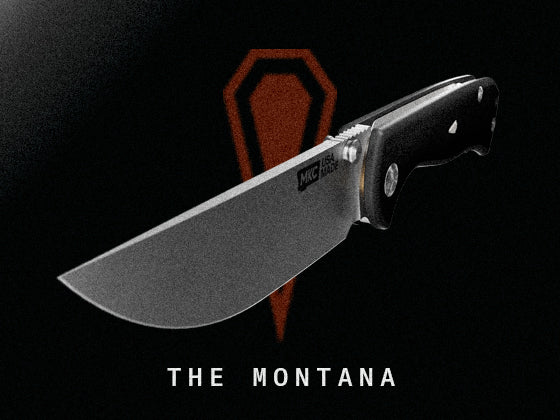
The blade is MagnaCut stainless steel, which holds an edge through hard use and resists corrosion. At 2.98 ounces with an 8-inch overall length and a 3 3/4-inch blade, the Battle Goat is compact and light enough to carry through a full shift without noticing it. The weight balance feels solid and intentional, not top-heavy or blade-light like a lot of knives in this size class.
The 3 3/4-inch blade is the right size for duty carry. It’s not so large that it draws attention on a vest or belt, but it has enough blade length to cut a seatbelt, slice through material quickly, or handle any field task an officer actually faces.
How I Carry My Police Knife on Patrol
I carry the Battle Goat on my vest rather than my duty belt. Vest carry keeps the knife accessible to me and out of reach for anyone I’m in close physical contact with. That positioning is as much a safety call as a preference.
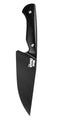
The sheath has an adjustable retention screw, so I can dial in exactly how easily the knife comes out based on my carry setup. Getting that tension right means the knife is secure when I don’t need it and out fast when I do.
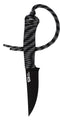
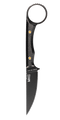
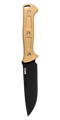
One detail officers often overlook is color. Most departments have requirements around equipment colors to maintain a uniform appearance. The Battle Goat comes in all-black Cerakote, which meets those requirements and keeps the knife from drawing attention on a dark uniform.
What I’d Tell Any Officer Choosing a Police Knife
Go with a fixed blade over a folder for primary duty carry. A folder is fine as a backup, but not as the knife you’d reach for in a real emergency. Look for a handle material you can clean completely, a blade steel that resists corrosion, and a size that stays inconspicuous on your uniform.
The best police knife for one officer won’t be identical to the best for another, but those three factors cut the list down fast. For me, after 22 years on the job, the Battle Goat hit all of them.
by Amber M., law enforcement leader with more than 20 years of service with the Seattle Police Department, and friend of MKC