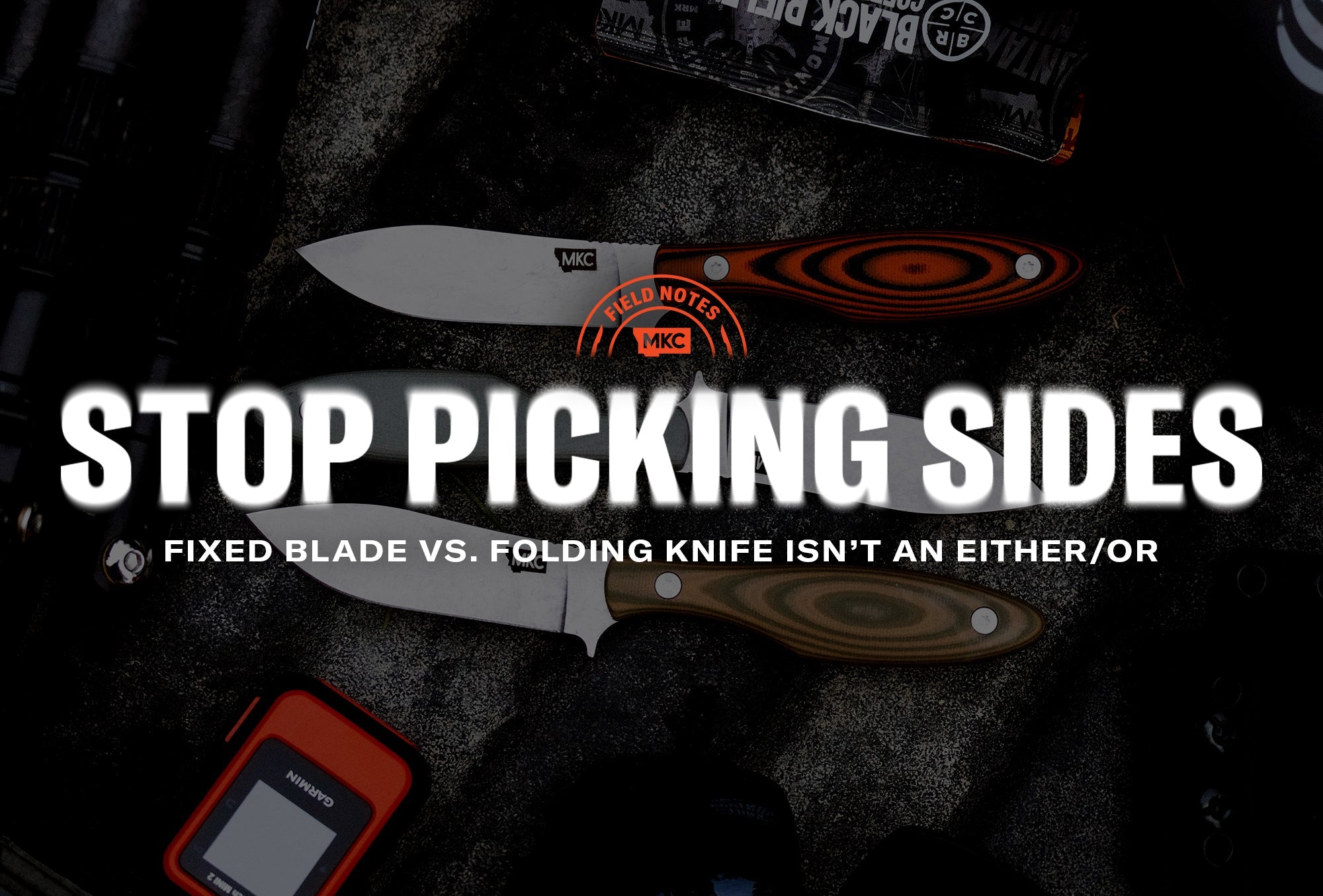

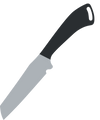
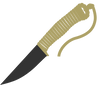
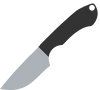
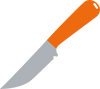

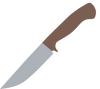
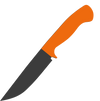
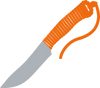
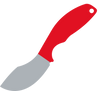



A compact fixed blade knife has qualities that folders can’t match: instant access, zero mechanical failures, and the reliability you need when every second counts. Whether you’re opening packages at home, cutting rope on a job site, or field dressing game in the backcountry, an EDC fixed blade is always ready to work.
At Montana Knife Company, we’ve spent years perfecting ultralight fixed blades that disappear on your belt but perform when you need them.
What Makes a Fixed Blade Ideal for EDC?
People throw around the term “everyday carry (EDC)” a lot, but we like to think of it as “everyday discreet carry.” The best EDC knife disappears until you reach for it, and nobody else knows it’s there.
A fixed blade knife has no moving parts, no pivot pins to loosen, no lock mechanisms to fail, and no springs to break. When you pull it from the sheath, it’s already deployed and ready to cut. That simplicity is the fixed blade’s greatest strength.
Compare that to a folder: you need to locate the blade, deploy it (often requiring two hands or an awkward one-handed flip), and hope the lock engages properly. In cold weather with gloves on, or when your hands are wet or dirty, that deployment becomes even more difficult.
When a Fixed Blade Knife Beats a Folder
Folders have their place, but fixed blade knives outperform them in several situations that matter for everyday carry.
Strength Under Stress
A fixed blade is one continuous piece of steel from tip to pommel. There’s no pivot point that can fail under lateral pressure. You can pry, baton, or apply force without worrying about the blade folding back on your fingers.
Folders have a designed weak point where the blade meets the handle, and given enough stress, any folder can fail at that joint.
Speed of Deployment
Your fixed blade is ready the instant you draw it. You won’t fumble for a thumb stud or flipper tab, and you won’t hope the assisted-opening spring fires correctly. In a self-defense situation or emergency, those extra seconds matter.
Easier Cleaning
Dirt, blood, and debris can work their way into a folder’s pivot-and-lock mechanism. Fixed blades wipe clean in seconds.
For hunters who need to field dress game, this difference becomes obvious after your first deer of the season.
Better Ergonomics
Because fixed blades don’t need to fold into a handle, designers can create more comfortable, purpose-driven grip shapes.
The result is less hand fatigue during extended use and a more secure grip in wet or slippery conditions.

The Ideal Size for Everyday Carry
The sweet spot for an EDC fixed blade knife sits between 3 and 4 inches of blade length. This range keeps you legal in most jurisdictions, comfortable enough to carry all day, and capable enough for serious cutting tasks.
If you go shorter than 2.5 inches, you sacrifice utility. If you go longer than 4 inches, the knife becomes harder to conceal and may run afoul of local blade length laws.
At MKC, our most popular EDC fixed blades fall right in this range:
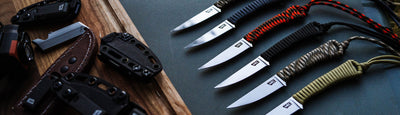
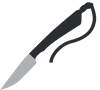
Mini Speedgoat 2.0: This is our lightest EDC option at just 1.21 ounces. The 3-inch MagnaCut blade handles tasks ranging from opening packages to breasting ducks. The paracord-wrapped handle includes seven feet of usable cordage, adding versatility without bulk. Overall length is 6.75 inches, making it easy to tuck into a pocket or carry inside the waistband.
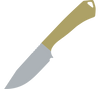
Speedgoat 2.0: This knife steps up to 3.75 inches of blade and 1.76 ounces of weight. It’s still ultralight, but it has more cutting real estate for larger tasks. This is the knife many of our customers choose when they want a single blade that handles both EDC duties and fieldwork.
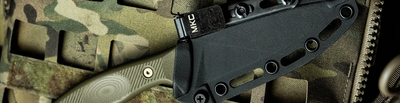
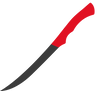
Battle Goat: The Battle Goat is our tactical fixed blade knife, designed for duty and hard use. The 3.75-inch MagnaCut blade wears a Cerakote finish for corrosion resistance and visibility. At 2.98 ounces with an 8-inch overall length, it’s lighter than it looks and built to handle daily tasks and emergency situations alike.
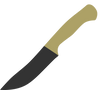
Stockyard: We call this one the rancher’s right hand for a reason. The utility-oriented Stockyard features a 3.375-inch MagnaCut blade and a snub nose for extra safety. At 3.14 ounces and 7.625 inches overall, it fits perfectly for everyday cutting tasks and handles fence lines, feed bags, and tough field work.
Rocker: The Rocker combines thick steel with a small package. At 0.122 inches thick, this blade has more backbone than our ultralight options for tougher prying and cutting. It’s the most compact G10-handled knife in our EDC lineup, with a 3.125-inch blade and an overall weight of 2.69 ounces.
How to Carry Your Fixed Blade EDC
The right carry method for your EDC fixed blade knife depends on your clothing, body type, and personal preference.
Horizontal belt carry: The knife rides parallel to your belt, usually behind the hip. This position keeps the handle accessible while concealing the sheath under an untucked shirt. Many of our fans prefer this method for hunting and outdoor work.
Inside-the-waistband (IWB): The sheath clips inside your pants, similar to how you’d carry a concealed handgun. This gives you excellent concealment, but requires a sturdy belt and properly fitted pants. Our Mini Speedgoat 2.0 comes with a metal pocket clip that makes IWB carry simple.
Appendix carry: The knife rides in front of the hip, usually just off center from the belt buckle. This position gives you the fastest draw, but it can be uncomfortable when sitting. It works best with compact blades under 3.5 inches.
Neck carry: A small fixed blade knife hangs on a cord around your neck, tucked under your shirt. This keeps the knife accessible regardless of what you’re wearing, including gym clothes or scrubs. The Mini Speedgoat’s light weight makes it a natural fit for neck carry.
Pocket carry: Yes, you can carry a fixed blade in your pocket. The key is a slim profile sheath with a deep-carry clip. Our Kydex sheaths include attachment points that accommodate aftermarket clips for pocket-carry setups.
Why Your Sheath Matters as Much as Your Blade
A fixed blade is only as good as its sheath. For EDC, the sheath needs to accomplish three goals: secure retention, comfortable carry, and fast deployment.
Secure retention means the knife stays put until you want it. Our Kydex sheaths make an audible “click” when the knife seats properly. You can run, jump, and roll without worrying about your blade falling out.
Comfortable carry requires a sheath that’s thin enough to disappear against your body and smooth enough to avoid irritating your skin through clothing. Kydex excels here because it maintains a consistent, slim profile.
Fast deployment depends on the sheath design. Look for a sheath that allows you to break retention and draw in one smooth motion. You don’t want to twist, pry, or wrestle your knife free.
We also sell leather sheaths through our Leather & Stitch collection for customers who prefer a traditional look. Leather breaks in over time and develops a unique patina, but requires more maintenance than Kydex.
Concealment and Clothing Considerations
Carrying a fixed blade knife discreetly requires some thought about what you’re wearing.
Untucked shirts are your friend. A shirt that falls past your waistband covers a horizontal carry or IWB setup without any special accommodation.
Heavier fabrics print less. A thin dress shirt will show the outline of your knife and sheath. A flannel, work shirt, or jacket conceals better.
Belt selection matters. A fixed blade sheath adds weight and bulk. Flimsy belts will sag or roll. Choose a stiff leather or reinforced nylon belt that can support your knife plus whatever else you carry.
Athletic wear works, too. Women can carry the Mini Speedgoat clipped inside the waistband of leggings or even secured inside a sports bra. That’s how light and low-profile our smallest blades really are.
If you spend time in professional settings where carrying a visible knife would be inappropriate, consider a deep-pocket carry setup or a neck knife worn under your shirt. That way, the blade is there when you need it and invisible when you don’t.
Common EDC Tasks and the Fixed Blade Features That Handle Them
Your fixed blade knife needs to match the work you do.
For opening packages and breaking down cardboard: The Rocker’s thick blade and compact size make it a warehouse workhorse. It won’t flex when you’re slicing through heavy cardboard, and the G10 handle gives you a solid grip even after hours of box duty.
For cutting rope, cord, and strapping: The Stockyard’s long, flat cutting edge and blunt tip make it ideal for slicing through fibrous materials without the risk of punching through material you didn’t intend to. Our ranchers have put it through its paces on baling twine, ropes, and feed bags.
For food prep: Smaller blades with fine edges work surprisingly well at mealtime. From slicing an apple to spreading cheese, the Mini Speedgoat does double duty as a lunch knife on job sites and in camp.
For field dressing and skinning game: Hunters need a blade that can handle gutting a deer and caping a mount. The Speedgoat 2.0 has enough belly for skinning and enough point control for detail work. Even the Mini Speedgoat 2.0 can handle breasting ducks and filleting fish when you’re traveling light.
For self-defense: A fixed blade deploys faster and won’t fold on your hand under stress. The Battle Goat’s tactical design and Cerakote finish make it a solid choice if personal protection is part of your carry criteria.
Legal Considerations for Fixed Blade Carry
Knife laws vary by state, county, and sometimes city. What’s legal in Montana may get you arrested in New York. Before you carry, research your local laws.
Blade length limits: Many jurisdictions restrict blades over 3 or 4 inches. Staying under 3 inches keeps you legal in most places, which is why we designed the Mini Speedgoat with a 3-inch blade.
Concealment rules: Some areas prohibit concealed fixed blades while allowing open carry, or vice versa. Know the difference before you clip a sheath inside your waistband.
Restricted locations: Schools, government buildings, courthouses, and other facilities typically prohibit all knives regardless of blade length. Plan accordingly.
Intent matters: Carrying a knife as a tool rarely raises legal issues. Carrying a knife with the stated intent to use it as a weapon changes the legal calculus entirely.
The MKC Generations® Promise
An EDC knife sees more action than a blade that only comes out on hunting trips. Daily use means daily wear on your edge. That’s why every MKC knife comes with our MKC Generations® promise: send your blade back to our Montana facility anytime for free resharpening and maintenance.
Use your knife hard, and we’ll keep it performing like new for as long as you, your kids, and your kids’ kids own it.
Choosing Your EDC Fixed Blade Knife
Your ideal EDC fixed blade knife comes down to four factors: weight, sharpness, concealability, and versatility. How you balance those depends on the activities your knife sees daily.
If you spend most of your time in an office or urban environment, weight and concealability matter most. The Mini Speedgoat 2.0 weighs just 1.21 ounces and tucks away in a pocket or inside the waistband without printing. It’s sharp and easy to conceal, and the paracord handle keeps it light while adding utility.
If your day takes you from the job site to the deer stand, versatility and edge retention take priority. The Speedgoat 2.0 and Battle Goat give you more blade to work with while staying light enough for all-day carry.
If you work with your hands and need a knife that can take a beating, the Rocker’s thick blade handles prying and heavy cuts without flexing, and the Stockyard’s long cutting edge chews through twine and strapping all day.
We make every MKC blade with American craftsmanship, premium steel, and the same attention to detail that earned me my Master Bladesmith certification. When you’re ready to carry a better blade than a folder, we’re here to help you find the right blade.
by Josh Smith, Master Bladesmith and Founder of Montana Knife Company