

















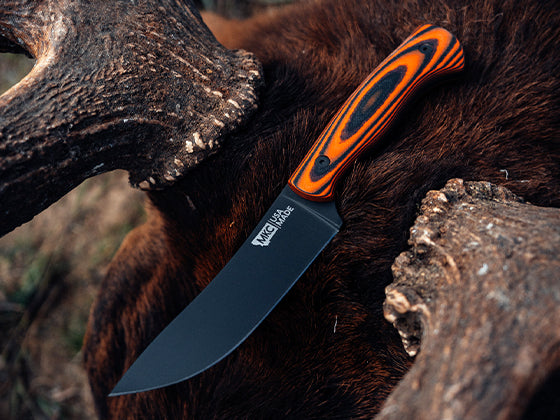
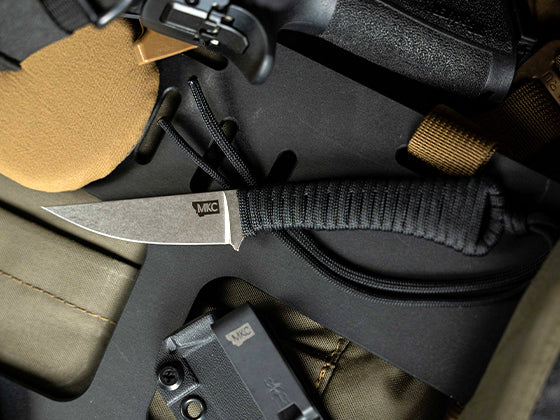


Your knife steel can make or break your hunt.
I’ve seen guys with expensive blades struggle to get through a single elk because their edge gave out. I’ve also watched hunters with modest knives process deer after deer without a hitch. The difference usually comes down to understanding what your steel can do.
At Montana Knife Company, we’ve spent years testing and refining blades in Montana’s backcountry. This comprehensive guide covers what we’ve learned about choosing the best knife steel for hunting, bushcraft, and everyday carry.
When It Comes to the Best Knife Steel, We Know What We’re Talking About
When I was 19, I became the youngest Master Bladesmith ever certified by the American Bladesmith Society. That certification required years of studying, testing, and proving I understood steel at a molecular level.
Now, as MKC’s founder, I make sure every knife goes through cryogenic heat treatment to optimize the steel’s structure. We don’t just slap a fancy steel name on a blade and call it good. We push these materials to their limits, then design around what actually works in the field.
When we moved most of our lineup to MagnaCut a few years back, it wasn’t a marketing decision. Three years of hard field testing showed it was the best knife steel for our customers’ real-world needs.
What Defines the Best Knife Steel?
Every knife steel balances six properties.
Edge retention determines how long your blade stays sharp. Steels packed with hard carbides hold an edge longer, but fight you when it’s time to sharpen.
Toughness keeps your blade from chipping or snapping under stress. Hit a bone wrong with brittle steel, and you’ve got problems. Toughness and edge retention tend to work against each other. When you gain one, you lose some of the other.
Corrosion resistance fights rust. If you hunt in wet conditions or aren’t always quick to dry your blade, corrosion resistance extends your blade’s life.
Ease of sharpening determines whether you can restore your edge in the field or need to wait to resharpen until you’re home. Some steels sharpen quickly on a basic stone; others require diamond abrasives and serious patience.
Hardness, measured on the Rockwell C scale (HRC), indicates how well a blade resists deformation and wear. Most hunting knives fall between 58 and 64 HRC. Higher hardness generally means better edge retention, but it also makes the blade more brittle and harder to sharpen.
The best steel for hunting knives is typically 60–62 HRC, which balances edge holding with toughness.
Heat treatment matters as much as steel selection. The same steel with different heat treatments will perform completely differently. We cryogenically treat every MKC blade to optimize hardness, toughness, and edge stability.
Steel Comparison at a Glance

The Best Knife Steels We Build With
CPM MagnaCut: Our Go-To for a Good Reason
MagnaCut has earned every bit of its reputation as the best knife steel. Metallurgist Larrin Thomas designed it specifically for knives, rather than repurposing drill bits or ball bearings. We heat-treat it to 61–63 HRC, hitting that sweet spot between hardness and toughness.
Most stainless steels achieve corrosion resistance by adding chromium, which forms carbides that reduce toughness. MagnaCut takes a different path. It keeps chromium dissolved in the steel matrix instead of locking it in carbides. You get genuine stainless performance with toughness that rivals carbon steels.
We use MagnaCut in much of our hunting lineup, including in our Blackfoot 2.0, Speedgoat 2.0, and Stonewall Skinner. Our field team has put these blades through hundreds of animals. They report that the edge lasts through a full elk without needing a touch-up, and that the blade wipes clean without rust.
MagnaCut is the best knife steel for hunters who want one knife that does it all without demanding constant attention. It costs more than budget steels, but you’re paying for performance gains, not marketing hype. When you factor in less time sharpening and zero rust headaches, MagnaCut earns back its premium over years of hard use.
52100 Ball Bearing Steel: Tough as They Come
52100 came from industrial ball bearings, but knife makers realized it makes phenomenally tough blades. It’s high-carbon steel, which means it’ll rust if you ignore it, but that carbon delivers toughness and edge-taking ability that stainless can’t match. We heat-treat our 52100 to 60–62 HRC for optimal performance.
We cryogenically treat our 52100 blades and apply a PVD coating to help fight corrosion. This steel earns its keep when you need to beat on your knife. From batoning through knotty firewood to prying to heavy chopping, 52100 soaks up abuse. The edge geometry we grind into these blades also makes them dead simple to sharpen on a basic field stone.
You’ll find 52100 in our MKC Chopper, Hellgate Hatchet, and several Speedgoat and Blackfoot variants for hunters who prefer traditional carbon steel.
52100 is the best knife steel for campers, bushcraft enthusiasts, and hunters who need maximum toughness and don’t mind the extra maintenance. As an established industrial steel, 52100 costs much less than newer powder-metallurgy options. You get elite toughness at a mid-range price, making it one of the best knife steels for financial value.
AEB-L: Surgical Precision
Heat-treated to 60–62 HRC, AEB-L takes an incredibly fine edge, sharper than most premium options, while staying tougher than you’d expect from stainless.
We picked AEB-L for our Boning Butcher and Breaking Butcher knives because serious meat processing demands a razor-sharp edge. AEB-L also sharpens fast, so you can touch it up easily during long sessions.
Unfortunately, AEB-L’s edge retention doesn’t match MagnaCut or S35VN. For processing work where you’re sharpening frequently anyway, that’s a fair exchange for superior edge quality.
AEB-L is the best knife steel for dedicated skinning knives, meat processing, kitchen work, and anywhere edge sharpness matters more than edge longevity. AEB-L sits at a mid-range price point and delivers excellent value for its intended purpose. For processing knives where you’re sharpening frequently anyway, paying extra for premium edge retention doesn’t make much sense.
440C: Proven and Practical
440C has been the workhorse stainless steel for decades. At 58–60 HRC, it won’t impress steel nerds, but it’s reliable, affordable, and gets the job done. It combines good rust resistance, decent edge retention, and ease of sharpening.
We use 440C in our MKC Steak Knives. These blades need to look sharp, survive the dishwasher, and handle nightly dinner service without fuss. 440C delivers on all fronts.
440C is the best knife steel for table knives, occasional-use outdoor blades, and situations where cost matters. As the most affordable steel on this list, 440C is an honest value. It won’t outperform premium options, but it won’t leave you disappointed either. For knives that see lighter duty, spending three times more on steel doesn’t make sense.
The Best Knife Steels You’ll See Elsewhere
CPM S30V and S35VN ruled the premium knife world before MagnaCut showed up. Typically heat-treated to 59–61 HRC, both deliver excellent edge retention and corrosion resistance. Many quality makers still rely on them, and they’re good steels. Priced similarly to MagnaCut, they bring proven performance, and you may find more knife designs available in these steels.
CPM 3V wins out in toughness. At 58–60 HRC, it absorbs abuse that would chip or snap other steels. It’s not stainless, though, so expect to put in maintenance time. Priced at the premium tier, 3V makes sense only if you need extreme toughness. If you routinely baton logs or pry with your knife (please don’t), 3V will handle it.
CPM 20CV and M390 maximize edge retention. Heat-treated to 60–62 HRC, they’ll cut longer than almost any other steel, but sharpening them requires serious equipment and patience. These sit at the top of the price scale and deliver diminishing returns for most hunters. They’re better for light-duty EDC folders thanks to this maintenance requirement.
Elmax has a balanced performance similar to S35VN with slightly better corrosion resistance. It’s popular in European production knives and suitable for general outdoor use. Priced in the premium tier, it competes with S35VN and has comparable value.
Knife Steel Myths That Won’t Disappear
Myth #1: Higher HRC Always Means a Better Blade
A 66 HRC blade might hold an edge forever, but it’ll chip if you look at it wrong. Hardness without toughness creates a fragile blade. The best knife steels balance both properties, which is why most land between 58–62 HRC.
Myth #2: Stainless Steel Can’t Match Carbon Steel’s Toughness
This was true 20 years ago, but modern stainless steels like MagnaCut have closed the gap. You can now get genuine stainless-steel performance without sacrificing the toughness carbon-steel users love.
Myth #3: The Best Knife Steel Equals a Better Knife
Steel is just one component. A $50 knife with proper heat treatment, good geometry, and solid handle construction will outperform a $300 knife with sloppy heat treatment every time.
Myth #4: You Need Expensive Diamond Sharpeners for Premium Steels
Some steels, such as 20CV and M390, require diamond abrasives. But MagnaCut, S35VN, and most hunting-oriented steels sharpen fine on quality ceramic or even natural stones. Match your sharpening system to your steel.
Myth #5: Surgical Steel Is a Premium Material
“Surgical steel” is a marketing term with no standardized meaning. It usually refers to 420 or 440A, which are basic stainless steels. Don’t pay premium prices for vague terminology.
Frequently Asked Questions About the Best Knife Steels
What’s the best knife steel for hunting?
For most hunters, CPM MagnaCut is the best choice. It balances edge retention, toughness, and corrosion resistance better than any other steel, and it handles tasks from caping to camp chores without rusting or chipping.
Is carbon steel or stainless steel the best steel for hunting knives?
Neither is universally better.
Carbon steels like 52100 feature excellent toughness and easy sharpening but require maintenance. Stainless steels like MagnaCut resist corrosion without the toughness penalty that older stainless options carried.
In this case, the best knife steel is the one you prefer.
How often should I sharpen my hunting knife?
It depends on the steel and its use.
A MagnaCut blade typically handles several deer before needing attention. A 52100 blade may need more frequent touch-ups, but sharpens faster.
Carry a field sharpener or strop regardless.
Does heat treatment really matter?
More than most people realize. Two identical steels with different heat treatments perform dramatically differently. That’s why we cryogenically treat every MKC blade.
What steel does MKC use most?
We use CPM MagnaCut in the majority of our hunting knives. We also use 52100 for heavy-duty applications, AEB-L for precision processing knives, and 440C for steak knives.
Is MagnaCut worth the price?
For serious hunters, absolutely. MagnaCut leads to less sharpening, no rust anxiety, and a blade that performs when it counts. You’ll feel the difference in the field.
The price compared to budget steels like 440C is notable, but you’re buying years of low-maintenance performance.
Find the Best Knife Steel for You
The best knife steel for you depends on how you use your blade. We’ve matched each knife in our lineup with the steel that best suits its use cases.
Browse our collection and find the best blade for your next adventure.
by Josh Smith, Master Bladesmith and Founder of Montana Knife Company