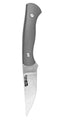
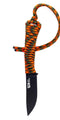
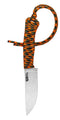
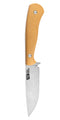
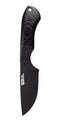
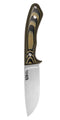
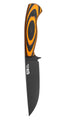
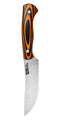

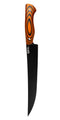
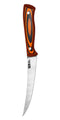
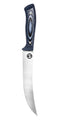
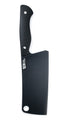
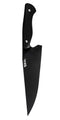
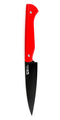
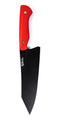
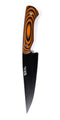
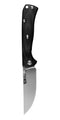

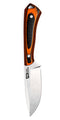
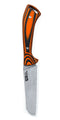

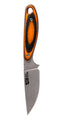
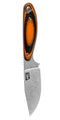
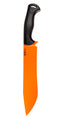
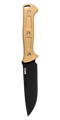
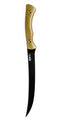
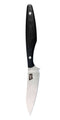



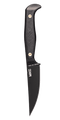

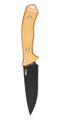




Kydex sheaths are more durable, easier to clean, and more versatile than leather sheaths. Leather still has its place for tradition and aesthetics, but for EDC, hunting, and field use, a Kydex sheath outperforms leather on nearly every practical measure.
It’s not that leather is bad. We craft both leather and Kydex knife sheaths at Montana Knife Company, but we ship all our knives with a Kydex sheath. Here’s why.
Sure, Leather Sheaths Look Good
I love the look of a leather sheath. It reminds me of my grandfather, and it probably reminds you of yours, too.
A trapper like Jim Bridger would’ve worn a leather sheath back in his day. That’s the look a lot of us are going for. We want a sheath that matches our leather gun sling or our horse’s bridle. I also find the smell of leather particularly pleasing.
A leather sheath on a leather belt with a nice buckle just looks good. No argument there.

What Is a Kydex Sheath?
Kydex is a thermoplastic acrylic-polyvinyl chloride material. It’s a rigid plastic sheet that becomes soft and pliable when heated, then hardens into a permanent shape once it cools.
To make a Kydex sheath, you heat a flat sheet of the material to around 300–350°F until it’s flexible, then press or vacuum-form the heated sheet around a specific knife blade, molding it to the exact profile. Once cooled, the Kydex holds that shape permanently, giving you a sheath that fits your knife like a glove from day one.
This heat-molding process gives a Kydex sheath its signature “click” when you seat a blade. The material forms a mechanical detent around the knife’s geometry, and that detent delivers consistent retention without any straps, snaps, or break-in period needed.
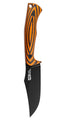
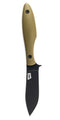
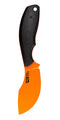
At MKC, our Kydex sheaths are heat-molded to each knife model we produce, from the 1.76-ounce Speedgoat 2.0 all the way up to the 5.53-ounce Stonewall Skinner.
Kydex Sheaths vs. Leather: At a Glance
|
Feature |
Kydex |
Leather |
|
Retention |
Mechanical click, consistent over time |
Friction-based, loosens with use |
|
Weather resistance |
Fully waterproof |
Absorbs moisture |
|
Maintenance |
Rinse and dry |
Oil, condition, dry thoroughly |
|
Weight |
Lighter |
Slightly heavier |
|
Noise |
Audible click on draw |
Quiet draw |
|
Carry options |
Multiple mounting systems |
Typically belt loop only |
|
Aesthetics |
Modern, utilitarian |
Classic, develops patina |
|
Break-in period |
None |
Days to weeks |
Kydex vs. Leather Sheaths: Durability
Kydex knife sheaths hold up against the elements. They’ll pull their weight in rain or shine.
Say you’re out on a hike in a storm. Water is running down your jacket onto your blade handle, and it soaks your sheath. Most manufacturers seal their leather sheaths shut, so in that situation, it would fill with water. That water stays against your blade all day long, and the leather absorbs it, expands, softens, and loses its shape. Even if the sheath isn’t sealed, moisture can still warp and stain the leather.
All our Kydex sheaths have a small drainage hole in the bottom for water to run through. Kydex won’t warp when exposed to water and doesn’t absorb moisture, so this drainage hole adds an extra layer of protection to your blade. Less exposure to moisture means less risk of rust.
MKC’s Kydex knife sheaths are heat-molded to each knife and hold their form regardless of your environment. They can get wet, warm, or cold repeatedly and still retain their shape.
Never store a knife long-term in a leather sheath. Leather can trap humidity, and the chemicals used in tanning can contribute to pitting corrosion on your blade over time, even on stainless steel. Kydex is chemically inert and safe for long-term storage.
Kydex vs. Leather Sheaths: Maintenance and Care
If you’re a leather fan, you likely already know about the maintenance it requires. You enjoy oiling your sheath the same way you oil your gun barrel or your knife to prevent rust. If your leather sheath rips, you restitch it and put it right back to work.
Kydex allows you to be far less particular in your care. Remember the rainwater example? What if another liquid, like blood, gets into your holster? Leather will soak it up and start to smell if not cleaned thoroughly.
Leather is a porous natural material, and oiling it regularly keeps it supple and water-resistant. If it dries out, it can become brittle, crack, and lose functionality.
Kydex, on the other hand, is a stable, nonporous thermoplastic. You can let it soak in soapy water without any ill effects. Just rinse it, dry it off, and it’s ready to go. Soap, water, done.
Use this simple process to clean and preserve your Kydex sheath:
- Rinse with warm, soapy water to remove dirt, blood, or debris.
- Use a soft brush or cloth to wipe the interior and clear out trapped grit.
- Let it air dry completely before resheathing your blade.
- Avoid the dishwasher and don’t leave it on a hot car dashboard; temperatures above 300°F can cause warping.
Another difference between leather and Kydex sheaths is their ability to trap particles. Leather holsters, with their fibrous interiors, are more prone to capturing sand and grit. Trapped particles can scratch your blade’s surface or even wear at the edge if you don’t clean them out regularly. Trust me, cleaning grit out of a leather holster’s creases after dropping it in sand is a nightmare.
Kydex is much easier to clean out. If you ever drop it in sand, you can just swish it around in water to free the particles.
Kydex vs. Leather Sheaths: Retention and Safety
Knife safety matters for both novice and experienced knife owners. If you carry a knife with you every day, like me, you constantly put it into and pull it out of the sheath.
Leather sheaths tend to loosen over time. Retention relies on friction, and as the leather softens and stretches with use, the fit gets sloppier. A leather sheath is much softer than a blade’s metal. If your leather sheath doesn’t have a good stopper, or if the stopper wears out, you could accidentally push a blade right through it.
MKC’s leather sheaths don’t have this problem. We commission them through one of the best sheath makers in the country: Francesca Ritchie over at Teton Leather in Idaho Falls. She uses stiff, high-quality leather and constructs her sheaths in a way that mitigates safety issues.
That said, leather is still a natural material, and if you don’t line up the blade properly, you can cut into it and pierce through the side.
That won’t happen with a Kydex sheath. Even if you fall down a mountain or off a horse, your sheathed knife can’t stab you in the leg.
A Kydex knife sheath keeps its shape and fit regardless of how much you use it. If the retention ever feels too loose or too tight, you can adjust it. Most Kydex sheaths, including ours, have an adjustable tension screw. Turn it clockwise to tighten, counterclockwise to loosen. Make small quarter-turn adjustments and test the draw after each one until you find the sweet spot.
If the tension screw alone doesn’t fix the issue, use a heat gun on a low setting. Aim short bursts of heat (five to 10 seconds at a time) at the area of the sheath that grips the blade, then gently press the Kydex inward with your fingers to tighten the fit. Don’t overdo it, and let the sheath cool completely before testing.
This same technique works in reverse if your sheath is too tight: heat the area slightly and let it relax.
Kydex vs. Leather Sheaths: Mounting Options and Versatility
A Kydex knife sheath can adapt to your carry style on the fly. It works with all sorts of belt clips, shoulder straps, and backpacks. You can even attach it to your Kydex gun holster.
All the hole patterns on our Kydex sheaths match industry-standard clips. You can swap between mounting systems without drilling new holes or buying a new sheath. The most popular options include:
- Belt loops and clips: The standard carry method. Our sheaths ship with a quick-attach belt hook that slides onto your belt without unclasping it.
- Tek-Lok: The MKC Tek-Lok is the industry gold standard for belt mounting. It accommodates belts up to 2.25″ wide, features a dual-lock system, and lets you carry vertically or horizontally. It contours to your body to eliminate hot spots.
- MOLLE-Lok: If you run tactical gear or a pack with MOLLE webbing, the MKC MOLLE-Lok snaps your Kydex sheath directly onto your vest, plate carrier, or bag with a spring-loaded quick-release pin.
- Scout carry: Mount your sheath horizontally behind your back for a low-profile carry. Scout carry pairs well with Tek-Lok or IWB straps.
No matter where you go or how you load up, our Kydex sheaths make it easy. I see farmers and ranchers clip them to their pickup truck visors and fly fishermen carrying them on their fishing vests. I’ve clipped mine to a piece of plastic on my raft. You can carry a knife in a hundred different ways, and a Kydex sheath offers the widest range of options.
Leather sheaths typically lock you into one or two positions, usually vertical belt carry with a fixed loop. Switching carry positions usually means buying a new sheath.
How Kydex Sheaths Behave in Extreme Temperatures
Kydex performs well in the vast majority of conditions, but extreme temperatures deserve a mention.
In extreme cold (below -20°F), Kydex can become more brittle than it is at room temperature. Normal use in cold weather is fine. You won’t have issues drawing and resheathing your knife on a winter hunt. The risk comes from hard impacts at very low temperatures: dropping your sheathed knife onto rocks at -20°F could crack the Kydex, where at room temperature it wouldn’t.
If your Kydex sheath has been sitting outside in bitter cold, let it warm up for 15 to 20 minutes before putting it through any rough use. Your body heat will usually do the trick.
In extreme heat, Kydex can soften and lose its shape. The material becomes pliable around 300°F, so normal summer heat won’t affect it. The real danger is leaving your sheathed knife on a car dashboard on a hot day. Interior car temperatures in direct sunlight can get high enough to cause warping. Keep your Kydex gear off the dash and out of sustained direct sunlight, and you’ll be fine.
Custom Kydex Sheath Options
One of the advantages of Kydex sheaths is customizability. Kydex comes in dozens of colors and patterns, from flat black to carbon fiber prints to blaze orange. At MKC, our Kydex sheaths come in colors that match our signature knife lines.
The industry-standard hole patterns on our sheaths mean you can take them to a custom Kydex maker who can add hardware, adjust the fit, or build you an entirely new sheath molded to your specific MKC blade. Kydex’s modularity makes this kind of customization simple.
Kydex vs. Leather Sheaths: The Final Word
Leather knife sheaths aren’t going away any time soon, and they have no reason to. A well-made leather sheath has its own appeal, and we’re proud of the ones Teton Leather builds for our knives.
But for everyday carry, hunting, and field work, Kydex knife sheaths deliver durability and versatility that leather just can’t match. They’re easy to clean, lightweight, weatherproof, and secure. They adapt to any mounting system, any carry position, and any condition you throw at them.
That’s why we ship all our MKC blades with Kydex knife sheaths.
Frequently Asked Questions About Kydex Sheaths
Does a Kydex sheath scratch your knife blade?
Kydex itself is softer than steel and won’t damage your edge. Trapped grit causes the real damage. Sand, dirt, or debris inside the sheath can act like sandpaper against your blade finish during draw and resheathing.
Keep your Kydex sheath clean, and this isn’t a problem. A quick rinse after field use goes a long way.
Is a Kydex sheath louder than a leather one?
Yes. Kydex produces an audible “click” when you seat the blade, and drawing the knife can make some noise, too. For most knife owners, that click is a reassuring confirmation of secure retention.
If you’re hunting and need a silent draw at close range, that’s one scenario where leather has the edge.
Can you repair a cracked Kydex sheath?
You can fix minor warping with a heat gun by carefully re-forming the affected area. Actual cracks, usually caused by impact in extreme cold, generally mean it’s time for a replacement.
Kydex sheaths are relatively affordable to replace compared to handmade leather.
Is it worth owning both a Kydex and a leather sheath?
Plenty of knife owners do. A Kydex sheath handles the hard daily carry, wet conditions, and backcountry use. A leather sheath looks great around camp or for casual carry. Owning both is practical, not redundant.
Why does MKC ship all knives with a Kydex sheath?
The sheath needs to work as hard as the knife. Kydex gives our owners reliable retention, easy maintenance, and the flexibility to carry however they want, straight out of the box. For owners who prefer leather, we have excellent options you can buy separately.
by Josh Smith, Master Bladesmith and Founder of Montana Knife Company