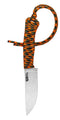
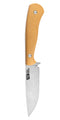
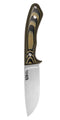

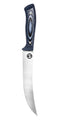
















A while back, someone reached out to me on Instagram to ask why some knives rust and others don’t. The answer is simple: steel rusts. Carbon and stainless steel alike will rust eventually without proper care.
The good news is that you have a lot of control over whether it does.
So, how do you keep knives from rusting? Clean and dry the blade after every use, wax it, dry out the sheath, and store it somewhere dry. The steel you carry, the climate you hunt in, and the way you store your blade all change how fast rust shows up.
Let’s explore what rust actually is, how we fight it at Montana Knife Company, and how to keep your knives from rusting at home and in the field.
Rust vs. Knife Patina: What’s the Difference?
Rust is the reddish-brown buildup that forms when the iron in steel reacts with oxygen and water. It’s corrosion. Left alone, it eats into your blade and ruins it.
A patina is different. Through exposure to air, moisture, and acids, a carbon steel blade can take on a yellowish color that darkens over time, sometimes to a brownish-black. A patina shields the steel’s surface from corrosion, and it even adds some character.
When your carbon blade changes color, don’t panic. Reddish-orange spots mean rust and need attention. A gray-blue-black film is the patina doing its job.
How We Keep MKC Knives From Rusting
Whether carbon or stainless, we fight corrosion to keep our knives from rusting right here at the shop.
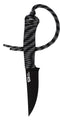
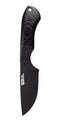
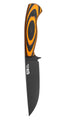
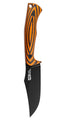
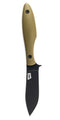
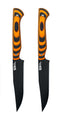
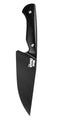
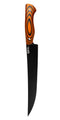
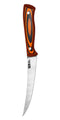
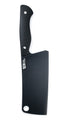
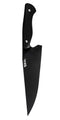
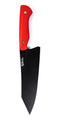
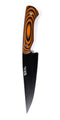
One of those steps is Parkerizing, applying a phosphate coating that protects carbon steel. This practice came out of the gun world. Those old black gun barrels are carbon steel, and Parkerizing kept them from rusting for decades. Parkerized steel beats corrosion to the punch: instead of rusting or even building a patina, the metal turns matte black and resists rust until it gets real abuse.
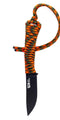
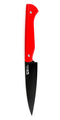
Some of our knives have a Cerakote finish instead, a baked-on ceramic coating that’s hard and tough against wear. A good portion of our current lineup also runs a PVD finish, which is a thin, hard coating that holds up well in the field. Every one of these finishes helps.
None of them make a knife bulletproof, though. Any coating can scratch when you actually use your knife. Once it scratches, air and water can reach the bare steel underneath. Even a coated blade still needs care.
Carbon Steel vs. Stainless Steel: Which Rusts Faster?
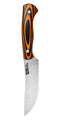
High-carbon steels like 52100 hold a wicked edge and resharpen easily. However, they contain little to no chromium, the element that resists corrosion. That means carbon steel will rust faster if neglected. The trade-off is a tougher, sharper blade that rewards a little maintenance.
Stainless steels have more chromium, so they resist rust longer. We use MagnaCut and AEB-L in a big share of our knives for that reason. Stainless steel can and will rust with abuse or neglect, just slower. Bleach, salt, and standing water will find its weak spots.
If you hunt or work in wet, salty conditions, look for a MagnaCut stainless blade. If you want maximum edge performance and don’t mind wiping your knife down, carbon steel will treat you well. Either way, the care routine is the same.
How to Keep Knives From Rusting After Every Use
If you learn one trick for how to keep knives from rusting, make it this one: Don’t put a dirty or wet knife away. Beat that habit, and you’ve won most of the fight.
After you use your knife, wash it with soapy water and dry it completely before putting it away. This matters doubly in the kitchen. Onions, citrus, vinegar, and other acids attack steel fast, so rinse them off right away.
Plenty of folks wash the blade, then leave it sitting in the sink. The next morning, they find a rough spot where the tip sat in a puddle of water. That’s rust, and it started overnight.
No matter what you cut, clean and dry the blade after each use.
The Best Oil to Keep Knives From Rusting Isn’t an Oil
Once your blade is clean and dry, wax it. We make our MKC Blade Wax from beeswax and raw flaxseed oil. Wipe it on, wipe it off, and you’re done. Reapply after every cleaning.
I tell people to wax even a coated blade. Wax keeps moisture from creeping under a scratch in the coating. Anywhere you see bare steel, like a sharpened edge or a logo, water can attack. Wax shuts that door. It’s not a bad idea on stainless, either.
A lot of guides will point you toward oils, and oils have their place. Food-grade mineral oil works fine on a kitchen blade you store for long stretches. The trouble is that some oils pull moisture out of the air, so if the coat isn’t perfect, the oil can invite the rust it’s there to stop.
Most oils aren’t food-safe, so carving an apple in the field gets you an oily snack. And oils have a smell. If you can smell it, game can smell it better, and the wrong wind carries it a long way.
That’s why we built our wax the way we did. It works on leather boots, gun slings, and your cutting board, too, so you can carry one tin for the whole kit.
Whatever you use, reapply it often. You’re dragging that edge through hide, flesh, bone, and rope, and that scrubs the protection right off.
Don’t Forget to Dry Your Sheath
You can baby the blade all day and still lose it to a wet sheath. Throw a clean knife into a sheath that holds saltwater, blood, or rain, and the blade will rust where you can’t see it.
Clean your sheath with hot soapy water, then dry it out fully before the knife goes back in. This applies to both our Kydex and leather sheaths. Leather deserves extra attention, since it holds moisture and tannins that work on steel over time. Don’t store a knife inside damp leather, ever.

How to Store Knives to Prevent Rust
Where knives live between uses does as much to keep them from rusting as the way you clean them. Each storage option handles rust a little differently.
|
Storage Method |
How It Handles Rust |
Best For |
|
Kydex sheath |
Sheds water, dries fast |
Field carry, daily use |
|
Leather sheath |
Looks great, can trap moisture |
Short-term carry, not long-term storage |
|
Knife block / magnetic strip |
Keeps blades dry and separated |
Kitchen knives in active use |
|
Hard case with desiccant |
Locks out humidity |
Long-term and off-season storage |
|
Safe with a dehumidifier rod |
Climate-controlled, very dry |
Collections and valuables |
Additionally, keep knives out of the dishwasher, since the heat, steam, and detergent are a rust factory. And drop a few silica gel packets in any case or drawer where blades sit for weeks at a time.
Keeping Knives From Rusting in Humid, Coastal, and Dry Climates
Your environment sets the pace for rust, so adjust how you keep knives from rusting to match your climate.
In humid areas, moisture in the air is enough to start corrosion on bare steel. Store blades with desiccant and keep them out of damp basements and hot garages. Wax a little more often than you think you need to.
Saltwater is the harshest condition your knife will face. If you’re fishing, diving, or working near the ocean, carry a MagnaCut stainless steel knife and rinse the blade in fresh water as soon as you can. Carbon steel is always tough to keep healthy around salt, no matter how careful you are.
Dry climates are the easy mode for rust, but they aren’t a free pass. Dust and grit still scratch coatings, and a sweaty hand still leaves moisture on steel. Wipe down and wax anyway.
Seasonal Knife Care for Hunters
Hunting knives often sit idle for months, and that’s prime time for rust to take hold unnoticed.
When hunting season ends, give each blade a deep clean, a full dry, and a fresh coat of wax before it goes into storage. Dry the sheath completely and store the knife in a dry, climate-controlled spot with a desiccant nearby. Put a blade away dirty in spring, and you’ll find it spotted in fall.
Before the next season, pull your knives out and inspect them. Catch a faint spot of surface rust now, and it wipes away in seconds. Ignore it, and it pits the steel.
How to Remove Surface Rust
Light surface rust usually lifts off with a fine abrasive like a high-grit polishing cloth, plus a touch of patience. Just know that abrasives and chemicals can take a coating, logo, or polished finish with them, so go mild and start gentle.
For rust worse than light surface spots, or for a step-by-step rust removal process for every steel type, review our full guide on how to remove rust from knives. Once the blade is clean again, dry it and wax it right away so the rust doesn’t come back.
Your Checklist for How to Keep Knives From Rusting
Follow this routine, and rust rarely gets a foothold:
- Wash with soapy water and dry the blade completely after every use.
- Wipe off acids like citrus and vinegar right away.
- Wax the blade after each cleaning, coated or not.
- Clean and fully dry the sheath before putting the knife back.
- Store in a dry spot with a desiccant for long stretches.
- Match the steel to the conditions: MagnaCut stainless for salt and wet, carbon for edge performance.
- Inspect blades before and after each season and treat any spots early.
Frequently Asked Questions About How to Keep Knives From Rusting
Does stainless steel rust?
Yes. It’s a myth that stainless steel can’t rust. More chromium makes it resist corrosion longer than carbon steel, but abuse, salt, bleach, or standing water will still rust it.
Will a coating stop my knife from rusting forever?
No. Parkerizing, Cerakote, and PVD all fight rust well, but every coating can scratch with normal use. Once bare steel shows, it can rust, so wax your blade anyway.
Is a patina the same as rust?
No. A patina is a protective gray-to-black film on carbon steel that guards against rust. The reddish-orange buildup is rust that needs to be removed.
What’s the best oil to keep knives from rusting?
For most owners, a food-safe wax beats oil. Oils can attract moisture, most aren’t food-safe, and many carry a smell that spooks game. Food-grade mineral oil is a fine choice for kitchen knives in long storage, though.
Can I use my MKC knife in saltwater?
Carry a MagnaCut stainless blade for saltwater work and rinse it in fresh water afterward. Carbon steel is hard to protect around salt, no matter how you care for it.
How do I store knives long-term?
Clean, dry, and wax the blade, dry the sheath, and store it in a dry, climate-controlled space with silica gel packets. Check it periodically for early spots.
by Josh Smith, Master Bladesmith and Founder of Montana Knife Company