





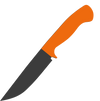


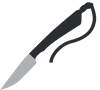
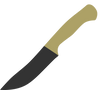
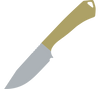






When your deer hits the ground, the real work begins. The right deer skinning knife makes the difference between a clean, efficient harvest and a frustrating mess that wastes meat.
I’ve processed more deer than I can count, and over the years, I’ve learned that the “best” deer knife depends on how you hunt, what you’re processing, and where you do the work.
Some hunters need an ultralight blade they can carry for miles on a backcountry stalk. Others want a dedicated skinner with enough belly to peel a hide in minutes.
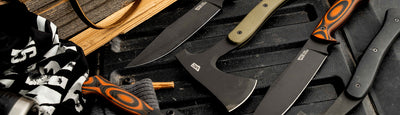
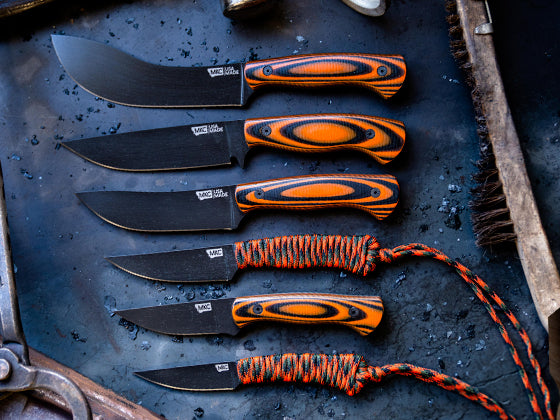
In this guide, I’ll break down the best deer hunting knives we make here at Montana Knife Company, explain when to use each type, and help you figure out which one(s) fit your hunting style.
Field Dressing Basics: Getting It Right From the Start
Field dressing is the best way to start the meat harvesting process. Done right, it takes 15–20 minutes and sets you up for clean processing later.
The two main approaches are the gutting method and the gutless method.
The gutting method involves opening the body cavity and removing organs, which works well when you can transport the rest of the carcass to a processing location later.
The gutless method skips the body cavity entirely, removing quarters and meat directly from the outside. It’s easier in backcountry situations where you’re packing meat out on your back.
The biggest mistake hunters make is puncturing the deer’s intestines or bladder. That contaminates the meat and creates an awful mess.
A sharp knife with a controlled tip helps prevent this. Some hunters add a gut hook to their kit to make the initial belly incision safer, but MKC’s drop point knives do a lot to help avoid these punctures.
For a complete walkthrough of both methods, check out our detailed guide on how to field dress a deer.

What Makes a Great Deer Skinning Knife?
Blade belly matters most. The “belly” is the curved portion of the cutting edge. A deeper belly means longer, sweeping strokes when you’re separating hide from meat. Less belly gives you more control for detail work. The best deer knife balances both.
Tip shape affects precision. A trailing point or upswept tip extends the belly and reduces the risk of puncturing the hide or gut. A drop point brings more versatility for gutting and boning, but requires a steadier hand during skinning.
Blade length is personal. Most experienced hunters prefer a blade between 3.5 and 4.5 inches for processing deer. Shorter blades limit your reach; longer blades get clumsy in tight spaces.
Understanding Knife Types: Skinning vs. Boning vs. Caping
One of the biggest misconceptions is that a single knife handles every task equally well. Here’s a breakdown of how different knife types perform across common deer processing tasks.
|
Knife Type |
Best For |
Blade Characteristics |
Trade-offs |
|
Field Dressing Knife |
Gutting, opening body cavity |
Drop point, 3.5–4″ blade, sturdy tip |
Less specialized for individual tasks |
|
Skinning Knife |
Removing hides cleanly |
Deep belly, rounded or trailing tip, 3–4.5″ blade |
Less precise for detail work |
|
Boning Knife |
Separating meat from bone |
Narrower, some flex, pointed tip, 5–6″ blade |
Too long for skinning and detail cuts |
|
Caping Knife |
Trophy prep around eyes, nose, ears |
Fine tip, maximum control, 2.5–3″ blade |
Too small for general processing |
Most hunters are best served by a general-purpose hunting knife with enough belly for skinning work. If you’re doing a lot of hide work or processing multiple deer in a season, carrying a dedicated skinner also makes sense.
Blade Length by Deer Size and Processing Stage
Choosing the right blade length depends on what you’re processing and what stage of the job you’re in. Here’s a cheat sheet that’ll help you choose the best knife for the job.
|
Deer Size |
Field Dressing |
Skinning |
Boning/Quartering |
Caping |
|
Small (Coues, Sitka) |
3–3.5″ |
3–3.5″ |
4–5″ |
2.5–3″ |
|
Medium (Whitetail, Mule deer) |
3.5–4″ |
3.5–4.5″ |
4–5″ |
2.5–3″ |
|
Large (Elk-sized, large muleys) |
4–4.5″ |
4–5″ |
5–6″ |
3–3.5″ |
For most deer hunters, a 3.5 to 4-inch blade handles field dressing and skinning well. If you’re boning out quarters in the field, consider stepping up to a longer, thinner blade that can follow the contours of leg bones and the spine.
Blade Flexibility: Why It Matters for Different Cuts
When you’re working around joints, ribs, and the pelvis, blade flex becomes critical.
Rigid blades (0.110″ thickness or more) give you control and stability. They won’t bend unexpectedly when you’re applying pressure, which makes them safer for gutting and splitting the pelvis. Most fixed-blade hunting knives have very little flex.
Semi-flexible blades (around 0.095–0.100″ thickness) follow bones more easily. This helps when you’re deboning quarters or working meat off the spine. You’ll leave less meat behind, but these knives require more skill to control.
Very flexible blades are typically reserved for filleting fish or specialized skinning tasks like fleshing bear hides. For deer processing, they’re usually overkill.
MKC’s hunting knives range from 0.095″ on the Speedgoat 2.0 (ultralight and thin) to 0.140″ on the Stonewall Skinner (stout and abuse-resistant).
Build Your Complete Deer Hunting Knife System
While a single do-it-all knife can handle most general deer processing, serious hunters who butcher their own animals can benefit from a purpose-built system. Fortunately, our robust lineup lets you set up the perfect deer processing kit with just MKC knives.
The Field Dressing Knife: Blackfoot 2.0
Every system starts with a solid field dressing knife. The Blackfoot 2.0 is designed to gut, cape, skin, and debone, all in a single package.
The Blackfoot 2.0’s drop point shape gives you enough tip for controlled cuts during gutting without the risk of puncturing organs. At 3.6 oz with a 3 3/8″ blade, it’s light enough to carry anywhere but sturdy enough to split a pelvis.
Blackfoot 2.0 specs:
- Overall Length: 7 1/2″
- Blade Length: 3 3/8″
- Blade Thickness: 0.110″
- Weight: 3.6 oz
- Blade Steel: 52100 ball bearing steel
- Handle: G10
The Skinning Knife: Stonewall Skinner
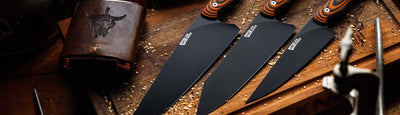
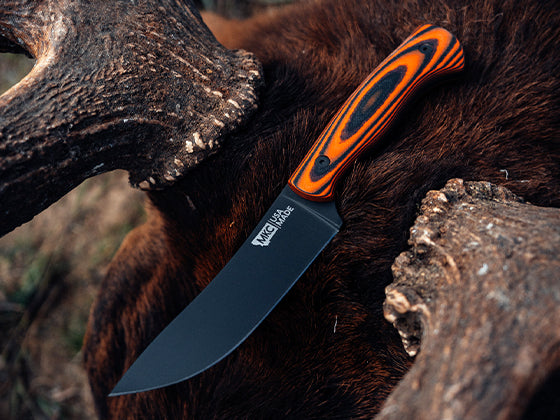
For dedicated hide removal, a true skinning blade is unbeatable. The Stonewall Skinner’s trailing point design and 4 5/8″ blade deliver maximum belly for long, sweeping strokes that separate hide from meat.
At 0.140″ thick, it’s stout enough to handle some abuse when working around joints and tough connective tissue. The G10 handle fills your grip and won’t absorb blood.
Stonewall Skinner specs:
- Overall Length: 9 1/4″
- Blade Length: 4 5/8″
- Blade Thickness: 0.140″
- Weight: 5.53 oz
- Blade Steel: 52100 ball bearing steel
- Handle: G10
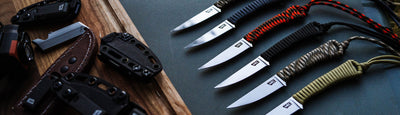
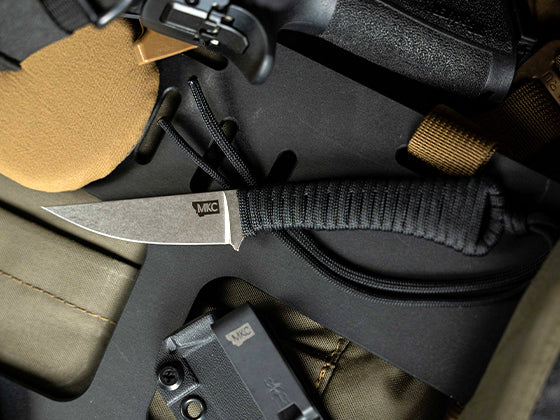
Ultralight Alternative: If you need skinning performance with minimal weight, the Stoned Goat 2.0 combines a trailing point blade with a paracord-wrapped handle at just 1.94 oz. It’s the lovechild of our Speedgoat and Stonewall Skinner.
The Boning Knife: Sawtooth Slicer
When it’s time to separate meat from bone, you want a longer, thinner blade that follows contours. The Sawtooth Slicer’s 5 5/8″ trailing point blade and 0.101″ thickness give it the reach and flex to work around joints, along the spine, and through quarters without leaving meat behind.
Whether you’re deboning at your tailgate, processing meat for the freezer, or breaking down quarters in the field, the Sawtooth Slicer handles it with surgical precision. The zero-hotspot G10 handle stays comfortable through long processing sessions, too.
Sawtooth Slicer specs:
- Overall Length: 10 5/8″
- Blade Length: 5 5/8″
- Blade Thickness: 0.101″
- Weight: 4.75 oz
- Blade Steel: MagnaCut
- Handle: G10
The Caping Knife: Mini Speedgoat 2.0
Trophy hunters need precision cuts around the eyes, nose, ears, and antler bases. The Mini Speedgoat 2.0 has an ultra-thin 0.090″ blade and a 3″ length that deliver the control you need for delicate work.
Plus, at just 1.18 oz, it’s ultralight and ultra-compact, making it easy to stash in your pack or on your person as a backup blade. The fine tip handles intricate cuts around facial features, and the paracord handle ensures excellent grip even with cold, wet hands.
Mini Speedgoat 2.0 specs:
- Overall Length: 6 3/4″
- Blade Length: 3″
- Blade Thickness: 0.090″
- Weight: 1.18 oz
- Blade Steel: 52100 ball bearing steel
- Handle: 550 paracord
The Purpose-Built Deer Knife: Whitetail Knife
If you primarily hunt whitetail or mule deer and want a knife designed specifically for the job, the Whitetail Knife combines our classic drop point shape with more belly for improved skinning performance.
The integrated finger guard keeps your hand from riding onto the blade, and the 4″ blade length hits the sweet spot for deer-sized game.
Whitetail specs:
- Overall Length: 8 5/8″
- Blade Length: 4″
- Blade Thickness: 0.135″
- Weight: 4.49 oz
- Blade Steel: MagnaCut
- Handle: G10
Deer Skinning Knife Buyer’s Guide
Before you pull the trigger on a deer skinning knife, you’ll want to decide on the details. Below you’ll find some extra considerations that’ll help you narrow down the best deer knife for you.
Steel Type: Stainless vs. Carbon
MagnaCut stainless steel has exceptional corrosion resistance and edge retention. It’s the best choice for hunters who want low maintenance and don’t want to worry about rust in wet conditions.
52100 carbon steel takes a wicked edge and resharpens quickly in the field. It requires more care to prevent rust, but many hunters prefer its ability to sharpen and cut.
Both steels perform exceptionally. Choose based on how much maintenance you’re willing to do.
Handle Material: G10 vs. Paracord
G10 handles clean easily, provide excellent grip in wet conditions, and won’t absorb blood. They add a bit more weight but deliver all-day comfort.
Paracord handles minimize weight and add emergency utility. You can unwrap the cord to fix a boot lace, hang meat, or guy out a shelter. They require more effort to clean thoroughly.
What About Replaceable Blade Knives?
Replaceable blade knives have their place, but they come with trade-offs. The blades are thin and can snap under pressure. Changing blades with cold, bloody hands is frustrating. Plus, you need to carry replacement blades, which take up room in a pack.
A quality fixed blade with good steel will process multiple deer without needing a touch-up. Our MagnaCut and 52100 steels hold an edge through entire animals. When it does need sharpening, a few strokes on one of our sharpening stones or honing rods brings it back.
Deer Hunting Knives: Quick Decision Guide
Here’s a quick, easy look at the benefits and drawbacks of our various deer hunting knives.
|
If You... |
Consider |
Why |
|
Hunt whitetail from stands/blinds |
Whitetail Knife |
Purpose-built for deer, excellent skinning belly, finger guard for safety |
|
Cover lots of ground on foot |
Speedgoat 2.0 or Blackfoot 2.0 |
Light, versatile, won’t slow you down |
|
Process multiple deer per season |
Stonewall Skinner and Sawtooth Slicer |
Dedicated skinner and boning knife covers all butchering bases |
|
Want one knife that does it all |
Blackfoot 2.0 |
Jack-of-all-trades, proven on game from goats to moose |
|
Hunt backcountry and bone out in the field |
Sawtooth Slicer |
Long, thin blade follows bone, ideal for quartering |
|
Save hides for tanning |
Stonewall Skinner or Packout Skinner |
Rounded/trailing tips prevent punctures |
|
Cape trophies for mounting |
Mini Speedgoat 2.0 |
Surgical precision for delicate work around eyes and antlers |
|
Hunt larger game (elk, moose) too |
Super Cub or Stonewall Skinner |
Longer blades handle bigger animals |
The Best Deer Skinning Knife Is One That Fits Your Hunt
There’s no single “best” deer hunting knife for everyone. The Whitetail shines for dedicated deer hunters who want a purpose-built blade. The Stonewall dominates when you’re skinning and processing multiple animals. The Blackfoot handles any situation, and the Speedgoat disappears into your pack until you need it.
Every MKC blade is designed for specific jobs. We don’t build knives randomly and hope you find uses for them. The best way to know which one fits your style is to get one in your hand and put it to work.
by Josh Smith, Master Bladesmith and Founder of Montana Knife Company

