




















A Sunday at His Grandfather’s Asado
In Argentina, an asado is a ritual. Birthdays, games, big occasions, even a stranger you just met can pull you in around the fire.
The process is slow and social. A picada starts the table: cheeses, salami, olives, and dried meats. Then the food comes out in stages: chorizos and choripans, then achuras, then the main cuts.
What Al misses most is the sobremesa. After eating, nobody leaves the table. Dessert, then coffee, then sweets, then hours of talking and arguing about politics and sports until it’s somehow dinner again.
A Romeo and Juliet Move
Al’s wife is Texan. They met while traveling, lived in Houston for six months, and got married.
A honeymoon trip to Argentina changed everything. The 2001 economic crash hit while they were there, and overnight, Argentinians needed a US visa to return. The embassy was chaos, and Al was told a visa could take four to six months, even with an American wife.
“It felt like a Romeo and Juliet moment,” Al says.
His wife flew home to the US without him. On her spring break, she came back to Argentina to visit, saw how happy he was at home, and asked if he wanted to try living there for at least a year. They stayed 13.
By 2015, his wife was ready to move home to the US, and Al was the one who finally said, “Okay, let’s move.” He wanted a new adventure.
When the Fire Saved Him
In February 2020, both Al’s distribution business and the trampoline park he’d poured his life savings into were gone. He didn’t know what to do, and some days he couldn’t get out of bed.
He thought about going back to Argentina, but his wife was clear: she’d rather be broke in the US than return to Argentina.
Before COVID hit, Al had been forming a plan to bring Argentine grills to the US. The grills were on the way to Texas when COVID landed.
Cooking pulled him through. At his lowest, his wife would come find him and say, “I’ve got a fire going. Let’s cook something.” That daily ritual became his anchor and, eventually, his business.
What American Pitmasters Get Wrong
Most people apply smoker rules to open fire asado, and Al says that’s the biggest mistake. They trim off too much fat, remove the membrane, and over-season the meat.
In asado, those pieces matter. Bone is flavor. Fat and membrane are protection.
People also assume that an open fire means huge flames and fast, hot cooking. Al has cooked steaks in 20 minutes over a gentle fire and pulled them off juicier than any sear could deliver.
For Al, fire is alive. It can be raging and violent or subtle and caring. You don’t control it. You manage it.
Texas, Argentina, and Three Kids at the River
Al has three kids, and the upbringing he worried they’d miss has already taken root. They’re outdoorsy, fish and hunt the Guadalupe River, and start a fire whenever the family is together at the river property.
Al sees a strong cultural overlap between Argentina and Texas. Gauchos and cowboys. Big ranches, hunting, fishing, and outdoor cooking. Outside the big cities, the values feel almost the same.
Why MKC?
In gaucho culture, a knife is an extension of the body. Gauchos tuck a knife in their belt and skip the fork: hold the meat with the knife, bite, then cut right at the lips.
For Al, the knife is the opposite of fire. Fire is wild and alive. The knife is the control inside that wildness.
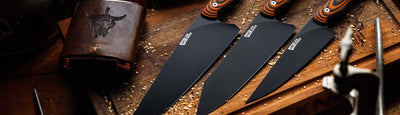
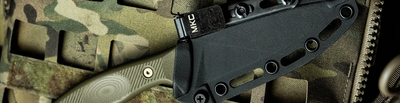
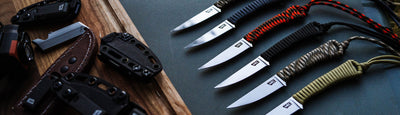
When he’s prepping a whole lamb or cabrito, Al reaches for the Little Bighorn Petty first, using the pointed tip to work joints, the spine, and the spaces between bones. Once the heavy work is done, he switches to the Big Horn Chef for slicing and final cuts.
What’s Next for Al
Al keeps cooking, teaching, and building his asado business out of Texas. The tradition his grandfather kept on a Sunday in Buenos Aires is alive on a Texas riverbank.
Keep Up With Al
-
TikTok: @alfrugoni
-
Instagram: @alfrugoni
-
Website: alfrugoni.com