

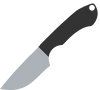


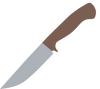
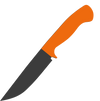


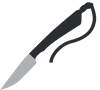
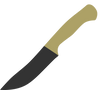
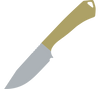

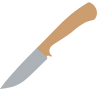

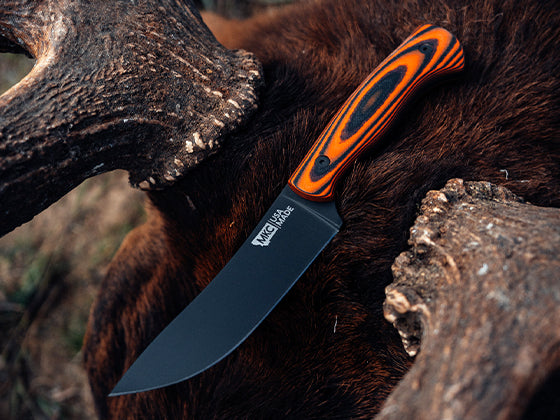


When you imagine a conventional hunting knife, you probably see a drop point blade.
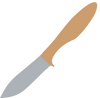
A drop point blade is the classic hunting knife shape. The spine curves downward from the handle to meet the cutting edge, creating a lowered, controllable tip. This geometry carries the blade’s thickest steel all the way forward to the point, giving you a tip that won’t snap under pressure.
Most drop point blades measure 3.5–6 inches long and feature a generous belly along the cutting edge. That curved belly is where most of your cutting happens, providing plenty of surface area for slicing through hide, muscle, and fat.
But what is a drop point blade actually for? Let’s find out.

Best Uses for Drop Point Blades
The drop point excels at skinning and gutting white-tailed deer, elk, or any other big game.
It won’t get in your way as much as the points on other blades do. It isn’t overly aggressive, and it’s much easier to control when it’s in the hand, making for a cleaner, easier cutting process.
Here’s where the drop point really shines:
Field dressing and gutting. The controlled tip lets you open an animal’s body cavity without nicking internal organs. One wrong move with an aggressive point can taint meat and create a mess you don’t want to deal with miles from camp.
Skinning and butchering. That curved belly glides under hide with smooth, sweeping strokes. The strong tip handles the prying and cutting required to separate joints, while the belly handles the slicing between muscle groups.
Everyday carry and general utility. Outside of hunting, a drop point blade handles rope, cardboard, food prep, and dozens of daily tasks without complaint.
Survival and bushcraft. Need to baton through wood? The robust tip won’t fold under pressure. A drop point can process kindling, carve tent stakes, and prepare game, all with the same blade.
Drop Point Blades vs. Other Blade Shapes: How They Compare
If you’ve shopped for knives, you’ve likely seen several common blade shapes. Each shape has strengths that depend on how it’s used.
Here’s how the drop point stacks up against three other popular designs.
Drop Point vs. Clip Point
The clip point has a concave curve (or “clip”) cut from the top of the blade near the tip. This curve creates a thinner, sharper point that excels at piercing and fine detail work. It’s the shape you see on classic Bowie knives and many tactical blades.
Unfortunately, that thin tip is more prone to snapping under lateral pressure. Most experienced hunters prefer the drop point because the thicker tip resists breakage during tough jobs like splitting pelvic bones.
Drop Point vs. Tanto
The tanto features a chisel-like tip where the edge meets the spine at a distinct angle rather than a curve. This design originated in Japanese sword making and results in an extremely strong piercing point.
Tantos excel at puncturing hard materials and tactical applications, but they sacrifice slicing ability. The angular transition between the tip and belly creates a less efficient cutting surface for skinning and utility work.
While processing game, a drop point will outperform a tanto every time.
Drop Point vs. Spear Point
The spear point is symmetrical, with both the spine and edge curving equally toward a centered tip. This creates excellent balance and a sharp point, ideal for piercing.
While spear points work well for self-defense and some utility tasks, their symmetrical design reduces belly size. Less belly means less cutting surface for slicing. For hunters who need to skin animals and process meat efficiently, the drop point’s larger belly has a clear advantage.
|
Feature |
Drop Point |
Clip Point |
Tanto |
Spear Point |
|
Tip Strength |
Excellent |
Moderate |
Excellent |
Moderate |
|
Piercing Ability |
Good |
Excellent |
Excellent |
Excellent |
|
Slicing/Skinning |
Excellent |
Good |
Poor |
Moderate |
|
Control |
Excellent |
Good |
Good |
Good |
|
Versatility |
Excellent |
Good |
Limited |
Moderate |
|
Best For |
Hunting, EDC, survival |
Tactical, detail work |
Puncturing, tactical |
Self-defense, utility |
For most hunters and outdoor enthusiasts, the drop point brings the most balanced capability across different tasks.
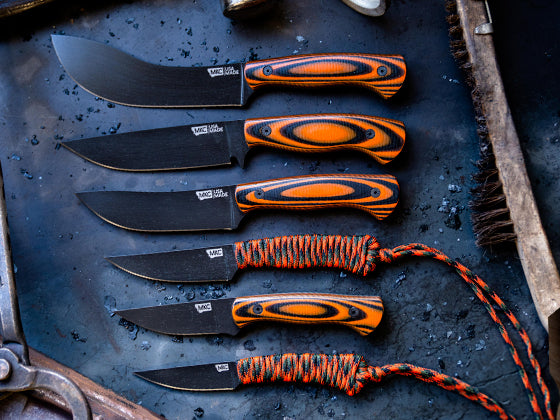
MKC Drop Point Blades for Every Hunt
The drop point blade inspired several of our most popular knives. Here’s how different MKC drop point blades serve different needs.
Super Cub: When You Need More Blade
The Super Cub was designed to handle the most demanding hunting scenarios. The 5.5-inch blade has a nice drop, with the steel thickest in the center for added strength. Any place you can reach in a Super Cub airplane, the knife named after it won’t let you down.
Super Cub specs:
- Overall Length: 10″
- Blade Length: 5.5″
- Blade Thickness: 0.145″
- Weight: 5.94 oz
- Steel: MagnaCut
- Handle: G10
Blackfoot 2.0: The Do-It-All Hunter
The Blackfoot 2.0 is one of our flagship knives. Master Bladesmith Josh Smith designed it to be compact and lightweight enough to pack on a mountain goat hunt, yet durable enough to field-dress a moose.
The Blackfoot’s drop point shape has enough tip for caping out an animal or doing fine work, but plenty of belly for skinning and deboning.
Blackfoot 2.0 specs:
- Overall Length: 7.5″
- Blade Length: 3.375″
- Blade Thickness: 0.110″
- Weight: 3.6 oz
- Steel: MagnaCut
- Handle: G10
Speedgoat 2.0: Ultralight Performance
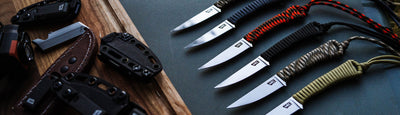
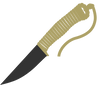
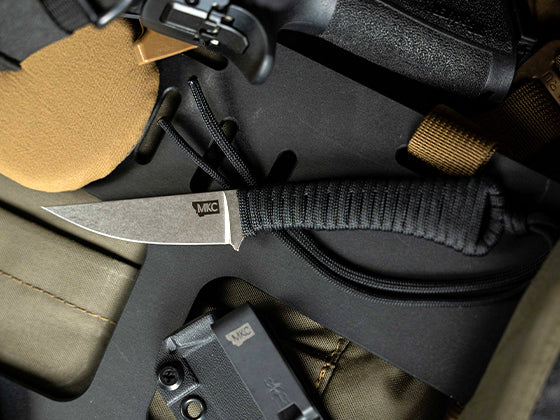
For backcountry hunters who go ultralight, the Speedgoat 2.0 delivers drop point performance at just 1.76 ounces. The paracord-wrapped handle keeps weight down while providing a secure grip, and it gives you bonus versatility in an emergency.
Speedgoat 2.0 specs:
- Overall Length: 7 7/8″
- Blade Length: 3.75″
- Blade Thickness: 0.10″
- Weight: 1.76 oz
- Steel: 52100 ball bearing steel
- Handle: 550 paracord
TF24: Tactical Drop Point
The TF24 proves the drop point isn’t just for hunting. This military-grade tool features a 4.125-inch drop point blade made from premium Cerakoted MagnaCut stainless steel, designed for demanding tactical situations.
TF24 specs:
- Overall Length: 9 1/8″
- Blade Length: 4 1/8″
- Blade Thickness: 0.158″
- Weight: 5.73 oz
- Steel: MagnaCut
- Handle: G10
Whitetail Knife: Purpose-Built for Deer Hunters
We designed the Whitetail Knife for the most popular big game animal in North America. The MagnaCut steel holds an edge through an entire deer without needing a touch-up.
Whitetail specs:
- Overall Length: 8 5/8″
- Blade Length: 4″
- Blade Thickness: 0.135″
- Weight: 4.49 oz
- Steel: MagnaCut
- Handle: G10
How to Choose the Right Drop Point Blade Size
The “right” drop point blade length depends on what you’re hunting and how.
For backcountry and ultralight packing, a drop point blade between 3 and 3.75 inches handles most tasks while keeping pack weight down. The Speedgoat 2.0 and Blackfoot 2.0 both fall into this range.
For general hunting, a 4–4.5-inch drop point blade gives more cutting surface for larger animals without becoming unwieldy. The Whitetail Knife sits comfortably here.
For heavy-duty work like processing elk, moose, or other large game, a drop point blade over 5 inches gives you the leverage to work efficiently. The Super Cub’s 5.5-inch blade handles these jobs with ease.
Most hunters find that a drop point blade in the 3.5 to 4.5-inch range covers 90% of what they’ll encounter in the field.
Frequently Asked Questions About Drop Point Blades
What is a drop point blade used for?
Drop point blades are versatile tools used primarily for hunting tasks like field dressing, skinning, and butchering game. They’re also popular for everyday carry, emergency and survival situations, and general utility work because of their strong tip and efficient slicing geometry.
Is a drop point good for self-defense?
Yes, though it’s not optimized for it. The drop point’s strong tip can handle defensive tasks, but blade shapes like the clip point or spear point have better piercing ability.
That said, the drop point’s durability and control make it a reliable option if self-defense is a secondary consideration.
Why is the drop point blade so popular?
The drop point is popular because it’s widely adaptable and capable without major weaknesses. The strong tip resists breakage, the lowered point gives control for precise cuts, and the curved belly excels at slicing. This balance often makes it the go-to choice for hunters and outdoor enthusiasts.
Can you baton wood with a drop point knife?
Yes. The drop point’s robust tip and thick spine make it well-suited for batoning. Unlike blade shapes with thin or aggressive tips, the drop point can handle the impact of striking the spine without damage. Full tang construction is important for this task.
Why are drop point blades best for hunting?
The drop point earned its hunting reputation by handling the full spectrum of game processing. From the initial opening cut to the final trim of silverskin, a single drop point can do it all.
Other blade shapes force compromises: clip points risk tip breakage on tough joints, tantos struggle with skinning, and spear points lack belly for efficient slicing. The drop point avoids these trade-offs.
Final Thoughts on the Drop Point Blade
You can’t go wrong with a drop point blade. It’s a good, strong, time-tested design hunters of all ages carry in the field.
Whether you’re drawn to the Speedgoat 2.0’s ultralight efficiency, the Blackfoot’s do-it-all capability, or the Super Cub’s heavy-duty performance, there’s a drop point blade built just for your hunting style.
If you’re ready to find your next blade, explore MKC’s full knife lineup. We’ve got drop points, skinners, and specialized blades for every hunting situation.

by Josh Smith, Master Bladesmith and Founder of Montana Knife Company

